This is the axis that decides whether a yard game gets played, and almost nobody publishes it. A list that ranks games by how fun they are is useless if the top three do not fit between your deck and your fence.
So we compiled the footprint of every game we cover, from the sport's governing body where one exists and from the manufacturer's published dimensions where it does not. The full table with the working is in how much space do yard games need. The short version is here.
The table
Every game we cover, by footprint
| Game | Footprint | Area | Longest run | Players |
|---|---|---|---|---|
| Giant 4 in a row | About 6 x 6 ft | 36 sq ft | 6 ft | 2 |
| Giant yard dice | About 8 x 8 ft | 64 sq ft | 8 ft | 2+ |
| Giant stacking tower | About 10 x 10 ft | 100 sq ft | 10 ft | 2+ |
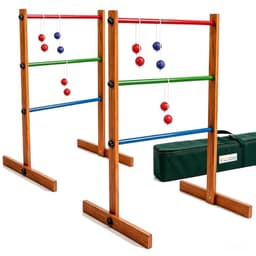
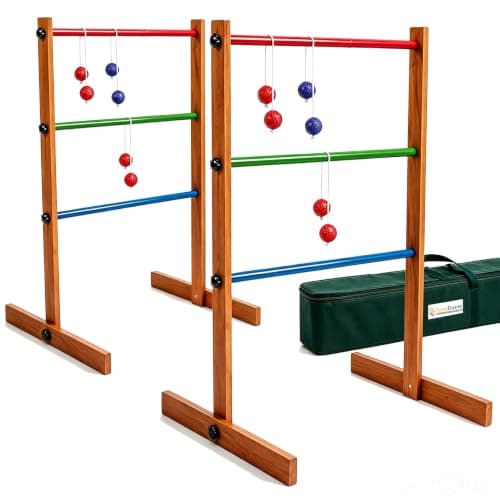
| Ladder toss | About 20 x 8 ft | 160 sq ft | 20 ft | 2 or 4 |
| Molkky | About 20 x 13 ft | 260 sq ft | 20 ft | 2+ |
| Cornhole | 33 x 10 ft | 330 sq ft | 33 ft | 2 or 4 |
| Kubb | 26 x 16 ft | 430 sq ft | 26 ft | 2 to 12 |
| Badminton (casual) | About 30 x 15 ft | 450 sq ft | 30 ft | 2 or 4 |
| Horseshoes | About 48 x 10 ft | 480 sq ft | 48 ft | 2 or 4 |
| Bocce (backyard) | About 60 x 12 ft | 720 sq ft | 60 ft | 2 to 4 |
| Badminton (full doubles) | 44 x 20 ft | 880 sq ft | 44 ft | 2 or 4 |
| Spikeball | About 30 x 30 ft | 900 sq ft | 30 ft | 4 |
| Bocce (USBF regulation) | 86.92 x 13.12 ft | 1,140 sq ft | 87 ft | 2 to 4 |
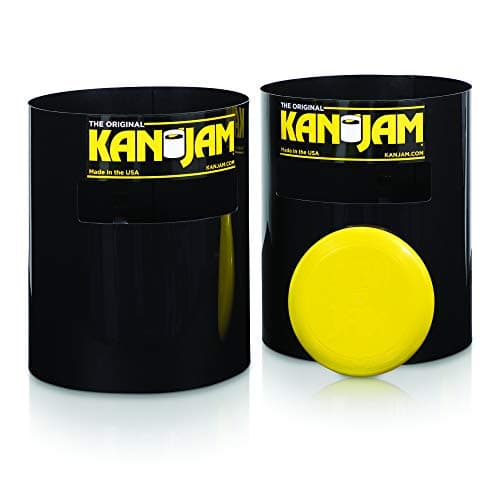
| Kan Jam | About 60 x 20 ft | 1,200 sq ft | 60 ft | 4 |
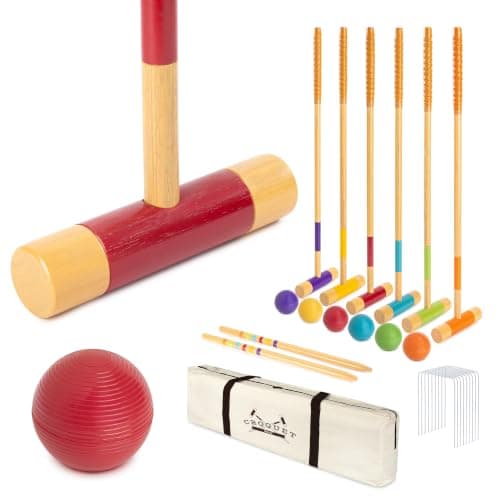
| Croquet (USCA nine-wicket) | 100 x 50 ft | 5,000 sq ft | 100 ft | Up to 6 |
How to read that table
Two numbers, not one
Area is the wrong number to shop on. Spikeball and Kan Jam are within 300 square feet of each other and are completely different propositions: Spikeball is a 30-foot square, Kan Jam is a 60-foot corridor. A long side yard holds one and not the other; a small square lawn holds the other and not the one.
So measure both. Longest clear run rules games in or out first. Width at that run is the second filter. Then you can look at area — mostly to reassure yourself that two games can be set up at once.
Go to your space
The ten collections
- Small yards — under about 30 feet of clear run. Ladder toss, Molkky, giant games.
- Big lawns — 60 feet and up. Where croquet, Kan Jam and full-size bocce finally make sense.
- Beach and sand — different rules entirely, because sand stops a rolling ball and softens a fall.
- Patios and balconies — hard standing, no lawn, and a shortlist of about three games that genuinely work.
- Sloped and uneven yards — the games that ignore a slope, the ones it makes more interesting, and the three that fall over.
- Driveways and hard surfaces — flat, long and drained. The surface a giant stacking tower actually wants.
- Side yards and narrow strips — long and thin is a shape, not a size, and most of these games are corridors.
- Parks and shared spaces — no lawn of your own. Nothing dug, nothing staked, nothing left behind.
- Indoors and the garage — the surface the giant games have been asking for, and the day the yard is unusable.
- Coastal and windy yards — wind ends more games than rain does, and which ones is entirely predictable.
Once space is settled, the other axis worth checking is who is playing: yard games by crowd.
Newly added
Artificial turf
Artificial turf is the flattest, shortest lawn you will ever play on, which makes it excellent for rolling games and wrong for anything that stakes into the ground or digs a pit. What works, what does not, and the wicket question croquet raises: yard games for artificial turf.
Newly added
Gravel and xeriscaped yards
A gravel yard is not a worse lawn — it is a different surface, and one classic game prefers it to grass entirely. What works when there is nothing to stake into and nothing rolls is in yard games for gravel and xeriscaped yards.
FAQ
Questions people actually ask
How do I measure my yard for a game?
What is the smallest yard game?
Can you shorten a yard game court?
Why you can check our work
We have not played these. Every figure above is copied from a manufacturer's published listing or a governing body's published rules, and named so you can verify it. Where a maker publishes nothing, the field is blank rather than filled in. How we pick explains the whole method, including what would change a recommendation.
Read next
Related pages
Picks
Best yard games for artificial turf
Flat and even — perfect for rolling games, wrong for anything that stakes in or digs a pit.
Picks
Best yard games for small yards
Five games that fit under 30 feet of clear run, with published footprints for each.
Picks
Best yard games for big lawns
The games that need 60 feet or more — and finally work when you have it.
Picks
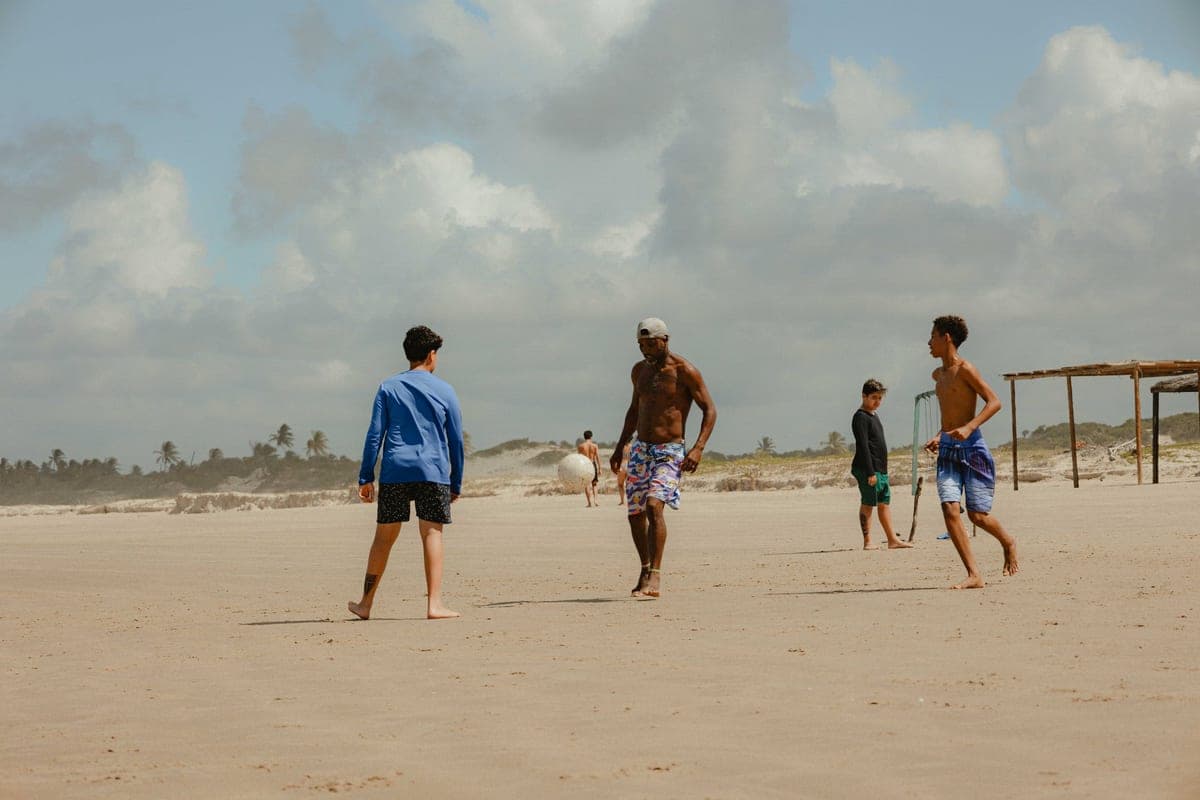
Best games for beach and sand
The games that get better on sand, the ones that stop working, and why.

Picks
Games for patios and balconies
Three games that genuinely work with no lawn — plus the ones to stop considering.
Guide
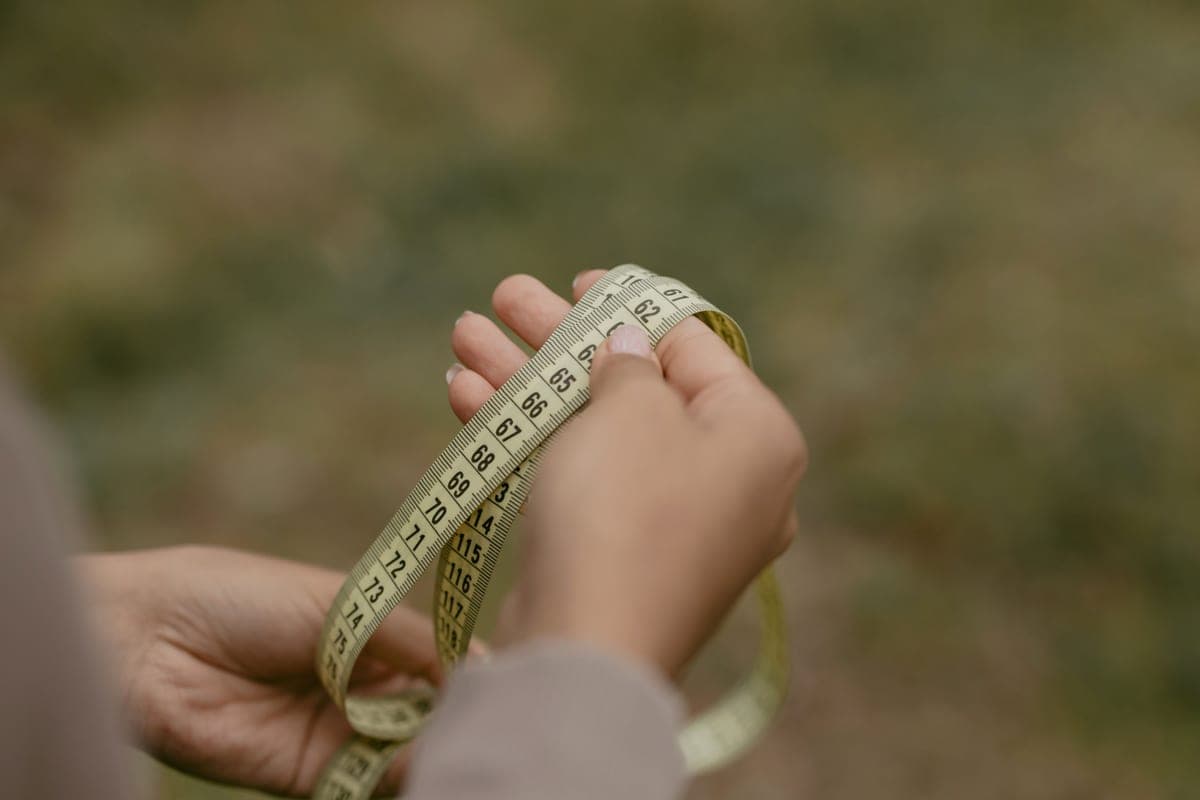
How much space do yard games need?
Every game's published footprint, longest run and player count in one sourced table.
Sources
- American Cornhole League — rules and regulations
- Kubb World Championship — rules (English)
- United States Croquet Association — nine-wicket croquet
- NHPA — backyard horseshoe court
Every figure on this page is copied from one of these sources. If you find one that is wrong or out of date, tell us and we will fix it.