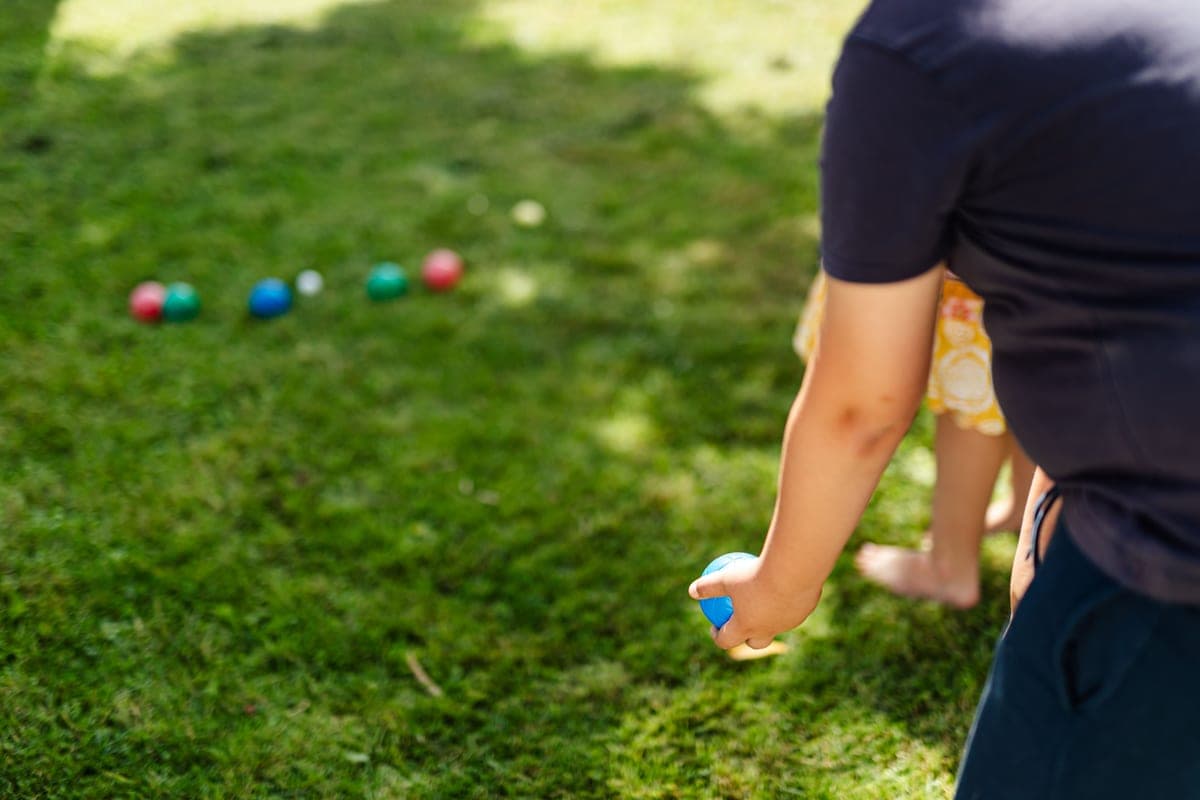
Bocce takes about ten seconds to explain and has a scoring system that quietly rewards thinking. Roll the small target ball, then roll your balls closer to it than the other team managed. Only one team scores per frame.
The sequence
How a frame works
- One team throws the pallino — the small target ball — down the court.
- The same team throws the first bocce ball.
- From then on, whichever team is not closest to the pallino throws next. That is the rule that makes bocce a thinking game rather than an alternating one.
- When all balls are thrown, the frame is scored and the pallino goes back the other way.
That third rule is worth reading twice. If your ball is closest, you stop throwing and your opponent keeps going until they beat you — so a great first throw hands the initiative to the other side.
Only one team scores
Scoring
At the end of a frame, find the team whose ball is closest to the pallino. That team scores one point for each of its balls that is closer than the opposing team's closest ball. The other team scores nothing.
- Your ball closest, opponent's next → you score 1.
- Your two closest, then theirs → you score 2.
- All four of yours closer than any of theirs → you score 4.
Because only one side scores, a frame can be salvaged with a single good throw right at the end. It also means knocking an opponent's ball away is worth exactly as much as placing your own well.
| Format | Balls per player | Typical target score |
|---|---|---|
| 1 v 1 | 4 each | Agree before starting; 7 to 13 is normal |
| 2 v 2 | 2 each | 12 under common open-rules formats |
| 4 v 4 | 1 each | 16 under common open-rules formats |
The version most people actually play
Bocce ball rules without a court
Almost nobody has an 86.92-by-13.12-foot prepared court, and bocce does not require one. Here is how to play properly on an ordinary lawn, a beach or a park.
- Pick a throwing line and stick to it. A path edge, a paving slab, a dropped towel. Everything else follows from having one fixed line.
- Agree a minimum pallino distance. On a court, the pallino has to cross a marked line. On a lawn, agree something equivalent — “past that tree” works fine. Without it, someone will drop the pallino at their feet.
- Agree what is out. The flowerbed, the patio, past the fence. A ball that goes out is simply removed for that frame.
- The lie is part of the game. On grass, slopes and bumps affect every roll. That is not a defect; it is the difference between lawn bocce and court bocce, and it rewards reading the ground.
- Move the throwing line each frame. Play back the other way from wherever the balls ended up, exactly as you would on a court. It keeps the lawn from wearing in one place too.
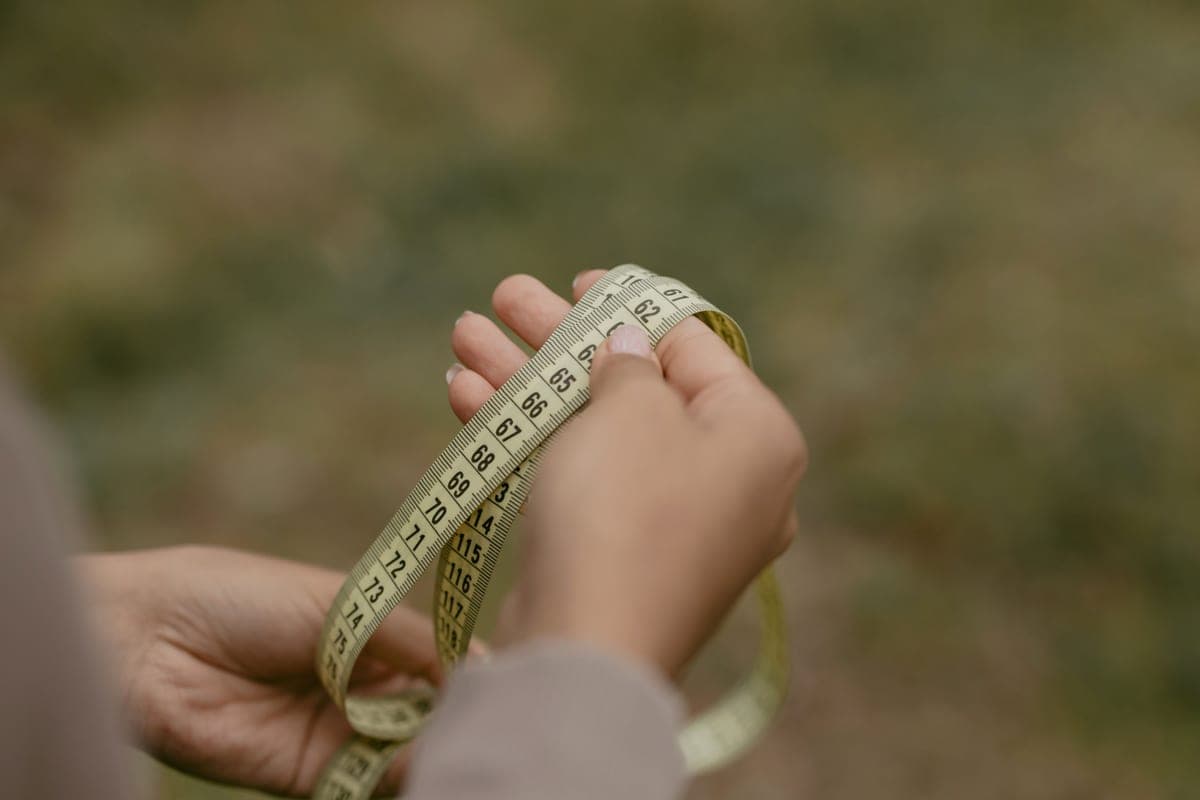
The one thing worth having: something to measure with. Two balls that look equally close usually are not, and the argument is the least fun part of bocce. Some sets ship with a measuring rope — see best bocce ball sets.
Strategy
The two shots
The roll (punto). Roll the ball along the ground to finish close to the pallino. The default shot, and the one that wins most frames.
The hit (raffa or bocciata). Throw hard to knock an opponent's ball away — or to move the pallino itself, which can turn a losing frame into a winning one in a single throw.
Moving the pallino is the move most casual players never think of, and it is the one that makes bocce genuinely tactical. If your opponent has three balls clustered around the pallino, do not try to out-roll all three: knock the pallino somewhere else.
Court dimensions if you are considering building one: bocce court dimensions.
What we would buy
The gear behind this guide
The sets whose published specifications this page is built on. Ranked on spec completeness and footprint clarity, not on testing we have not done.

Best overall
St. Pierre Sports Professional Bocce Set, 107 mm
St. Pierre
107 mm thermo-set composition resin balls built to international bocce specifications and named an official ball of the United States Bocce Federation.
Skip this if
Skip this if the set is mainly for kids or a beach bag. Full-size 107 mm balls are heavy enough that a small player cannot roll one accurately.
Price as of October 19, 2026. #ad How we make money
Best for mixed ages
Baden Champions Bocce Ball Set, 90 mm
Baden
The same Champions set stepped down to 90 mm, which is the size change that lets a nine-year-old and an adult play the same game honestly.
Skip this if
Skip this if anyone in the house is building toward league play. Tournament balls are 107 mm and the smaller ball rolls differently.
FAQ
Questions people actually ask
How do you score in bocce?
What score do you play to in bocce?
Can you play bocce without a court?
How many balls does each bocce player get?
What happens if two balls are equally close?
Why you can check our work
We have not played these. Every figure above is copied from a manufacturer's published listing or a governing body's published rules, and named so you can verify it. Where a maker publishes nothing, the field is blank rather than filled in. How we pick explains the whole method, including what would change a recommendation.
Read next
Related pages
Picks
Yard game guides
Rules, regulation dimensions, materials and storage — sourced from governing bodies and makers.
Picks
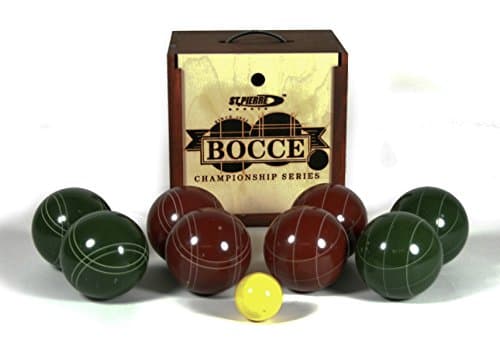
Best bocce ball sets
Six sets compared on published ball diameter, material and weight — including the size question nobody explains.
Guide
Bocce court dimensions
USBF regulation, backyard and indoor court sizes — and how small a court can honestly get.

Picks
Best games for beach and sand
The games that get better on sand, the ones that stop working, and why.
Guide
How much space do yard games need?
Every game's published footprint, longest run and player count in one sourced table.
Sources
Every figure on this page is copied from one of these sources. If you find one that is wrong or out of date, tell us and we will fix it.