
Most yard-game decisions are not “which cornhole set”. They are “this game or that one”, and the two games in question usually sit in different categories — which is exactly why nobody compares them.
Every comparison here leads with a verdict, then shows the published specifications that support it, then tells you plainly which one to pick under which conditions.
Start here
Every comparison
| Comparison | The real question | What decides it |
|---|---|---|
| Spikeball vs Kan Jam | Which four-player active game? | Whether your space is a square or a corridor |
| Molkky vs kubb | Which Nordic pin game? | 430 sq ft versus 260 sq ft |
| Giant Jenga vs giant connect four | Which giant game? | Whether you need a crowd game or a two-player one |
| Bocce vs kubb | Which precision game? | Group size — 2 to 4 versus 2 to 12 |
| Cornhole vs ladder toss | Which first yard game? | Whether you have 33 feet of clear run |
| Cornhole vs Kan Jam | Which one should a host buy first? | Whether guests drift in or commit to a match |
| Horseshoes vs ladder toss | Permanent court or portable set? | Whether you will dig two clay pits |
| Croquet vs bocce | Which lawn game for a gathering? | Lawn quality, and whether you need six players |
| Spikeball vs badminton | Which net game? | Wind — a shuttlecock loses to a breeze |
| Giant Jenga vs yard dice | Which giant game for a lawn? | Whether you have hard, level ground |
| Bocce vs horseshoes | Which adult precision game? | How much groundwork you are prepared to do |
| Cornhole vs bocce | The most common decision there is | Whether you have 33 feet of clear run |
| Kubb vs ladder toss | Crowd game or small-yard game? | Capacity against simplicity |
| Molkky vs bocce | Which precision game for a small yard? | Whether the set will be brought indoors |
| Croquet vs kubb | Which lawn game takes a bigger group? | How good your lawn actually is |
| Giant Connect Four vs yard dice | Which giant game fits? | A two-player game against a group activity |
| Cornhole vs Spikeball | Party fixture or actual sport? | Whether you need a game or an occasion |
| Cornhole vs horseshoes | The backyard classic, two ways | Whether you will dig two clay pits |
| Kan Jam vs ladder toss | Which toss game for your yard? | 1,200 square feet against 160 |
| Badminton vs Kan Jam | Which four-player game? | Wind — one stops working, the other gets harder |
| Croquet vs Molkky | The widest gap in the catalogue | 5,000 square feet against 260 |
Method
How we compare
Every comparison uses the same four axes, all sourced rather than felt:
- Footprint, from the governing body's published court dimensions where one exists.
- Player count, from the published rules or the manufacturer's listing.
- Surface and weather tolerance, from the published material and the surfaces the rules name.
- What each one asks of the player — strength, reach, fitness or placement.
What we do not do is tell you which is more fun. We have not played these, and a fun ranking from someone who has not played them is worth nothing. The full method is on how we pick.
Newly added
Cornhole vs washer toss
The closest pair on the whole site. Washer toss borrows cornhole's scoring almost exactly — three for the hard shot, one for the easy one, first to 21 — and needs about 26 feet instead of 33. What separates them is that one has a published rulebook and the other has regional conventions: cornhole vs washer toss.
Newly added
Seven new head-to-heads
The games added to this site recently each come with the obvious alternative a buyer weighs them against: bocce vs lawn bowling, Spikeball vs pickleball, Kan Jam vs Polish horseshoes, hook and ring vs ring toss, tetherball vs gaga ball, dunk tank vs slip and slide and capture the flag vs flag football.
Newly added
Four more head-to-heads
Spikeball vs Slammo settles a brand question rather than a game one; pickleball vs badminton is decided by the ground under your feet; ladder toss vs washer toss is the small-yard pair; and quoits vs horseshoes is the pitching game with a pit against the one without.
Newly added
Seven more head-to-heads
The matrix gaps, filled. America's default game against the Scandinavian one in kubb vs cornhole. The two boules games in bocce vs petanque and petanque vs lawn bowling. The two pit-and-target games in washer toss vs horseshoes, and the soft-tip newcomer against the governed original in lawn darts vs horseshoes. On the net side, volleyball vs badminton and Spikeball vs volleyball; and for a yard full of children, gaga ball vs tetherball.
Newly added
Eleven more head-to-heads
The two biggest party games, finally compared: cornhole vs giant Jenga. On the net side, pickleball vs volleyball comes down to whether your ground is hard or stakeable. Disc throwers get disc golf vs Kan Jam; the rolling family gets croquet vs lawn bowling; and the giant shelf gets giant Jenga vs giant dominoes.
For the small-footprint throwing games, ladder toss vs ring toss and quoits vs ring toss. For exact-finish scoring, Molkky vs ladder toss. For precision without a lawn, petanque vs horseshoes. For summer, slip and slide vs sprinkler games. And for a lawn big enough to run on, flag football vs backyard soccer.
FAQ
Questions people actually ask
Which yard game should I buy first?
Why are comparisons in their own section?
Why you can check our work
We have not played these. Every figure above is copied from a manufacturer's published listing or a governing body's published rules, and named so you can verify it. Where a maker publishes nothing, the field is blank rather than filled in. How we pick explains the whole method, including what would change a recommendation.
Read next
Related pages
Comparison
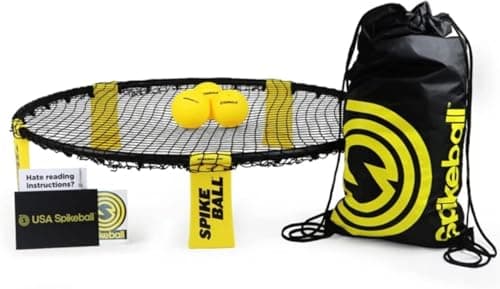
Spikeball vs Slammo
Same game, same net size — the published differences in the box, and the one reason to pick either.
Comparison
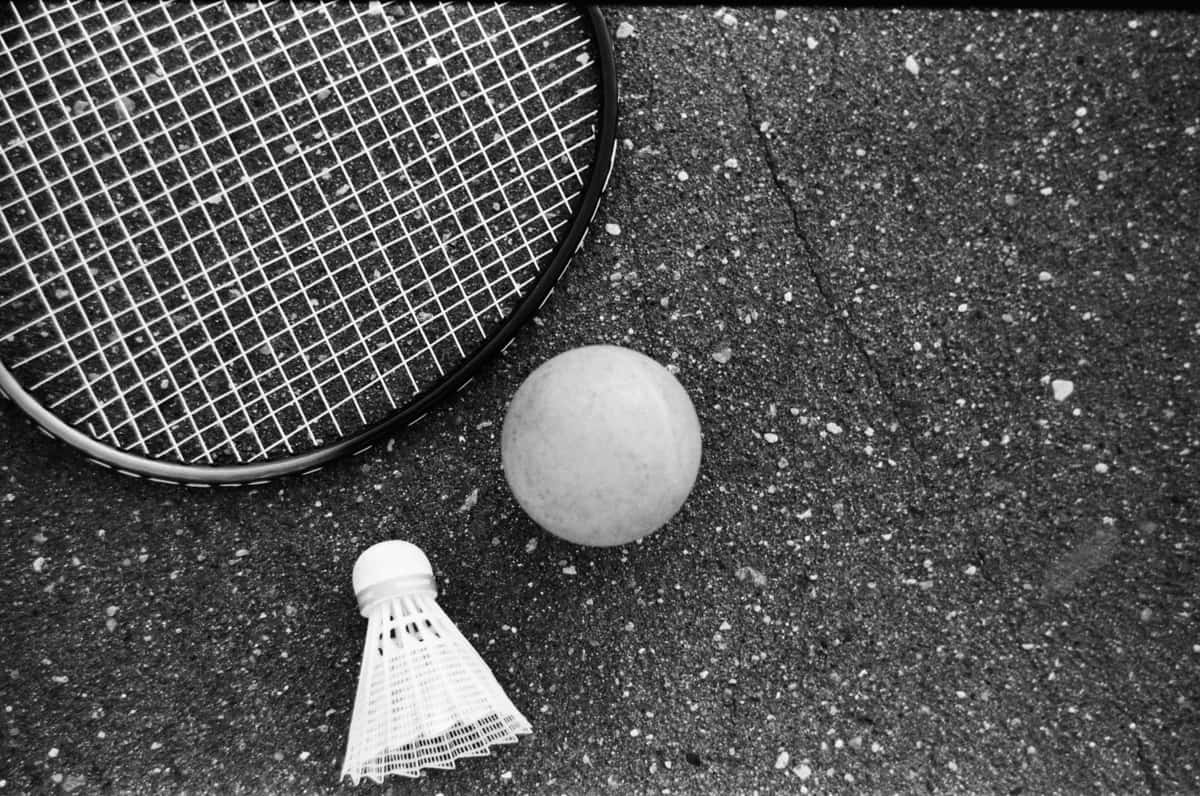
Pickleball vs badminton
Hard court and a heavy ball, or grass and a shuttle that hates wind — your yard usually decides.
Comparison
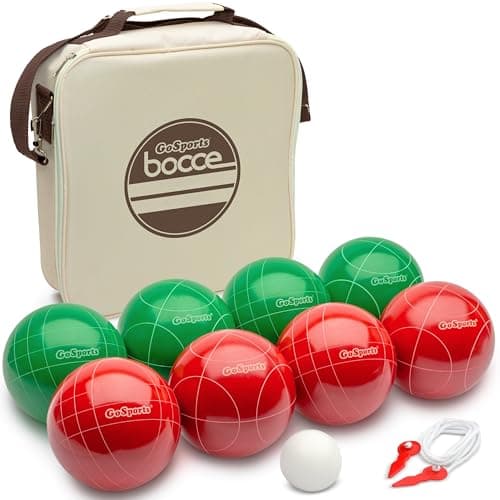
Bocce vs lawn bowling
Judgment against a straight arm — which rolling game suits your crowd, with the published figures.
Comparison
Spikeball vs pickleball
A 30 ft grass circle against a hard 22 ft rectangle — the space, not the sport, decides this.
Comparison
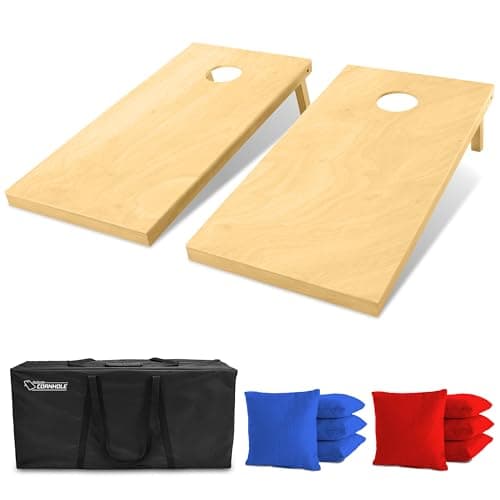
Cornhole vs washer toss
The same 3-and-1 scoring to 21 — one with an ACL rulebook, one with regional conventions.

Comparison
Spikeball vs Kan Jam
Two four-player games with opposite space requirements — a square versus a corridor.
Sources
- Kubb World Championship — rules (English)
- International Molkky Organisation — game rules
- Kan Jam — how to play
- Spikeball / roundnet published specifications
Every figure on this page is copied from one of these sources. If you find one that is wrong or out of date, tell us and we will fix it.