The published specs
Side by side
| Giant stacking tower | Giant yard dice | |
|---|---|---|
| Footprint | About 10 x 10 ft of clear space | About 8 x 8 ft of clear rolling space |
| What the footprint is | A fall radius | A rolling area |
| Pieces | 56 blocks, 1.5 x 2.5 x 7.5 in | 6 dice, 3.5 in |
| Start height | 2.5 ft, 19 rows | Not applicable |
| Max height in play | 5 ft | Not applicable |
| Material | Sustainably sourced New Zealand pine | Hand-sanded pine, heat-stamped numbers |
| Published age floor | 8+ (Yard Games); 12+ for Jenga GIANT hardwood | None published |
| Players | 2 or more | 2 or more |
| Ground required | Hard and level — this is not optional | Anything |
| Included | Nylon carrying case | Dry-erase scoreboard and canvas bag |
| Wind | A real risk at full height | None |
Read this before buying either
The ground rule that decides this
Everything else in this comparison is preference. This part is physics.
A giant stacking tower is 19 rows of three blocks, starting at two and a half feet and reaching over five feet as it is played. All of that mass sits on a base the size of three blocks side by side. Grass is soft, almost always slightly domed, and compresses unevenly under weight — so the tower develops a lean before anyone touches it, and the game becomes an argument about whether it fell on its own.
Play it on a patio, a deck, a driveway, or on a flat board laid on the lawn. That last option is genuinely the fix if hard standing is not available, and it costs nothing.
Yard dice have no equivalent failure mode. You throw six pine dice into about 8 by 8 feet of space and read the numbers. Long grass slows them, which is if anything an improvement, and a slope only matters if it is steep enough to roll them into a hedge.
Detail on both: giant Jenga rules and giant games in wind and weather.
Crowd
Who is playing changes the answer
The tower is a two-player game a crowd watches. That is not a criticism — spectating a tower at five feet is genuinely enjoyable, and it is why these turn up at weddings. But at any given moment one person is playing.
Dice are a group activity with no fixed cast. The GoSports set ships a dry-erase scoreboard precisely because the expected use is a running score across however many people are there. People join between rolls without anything being restarted.
Age floors point the same way. Yard Games publishes 8+ across the Tumbling Timbers range and Jenga GIANT publishes 12+ for its hardwood set. More to the point, a tower's interesting phase is its endgame, and the endgame happens above the starting height — on a 2.5-foot set, that means placing blocks at four or five feet. A seven-year-old cannot reach it.
If younger children are the audience, the smaller towers exist for exactly this reason — see giant Jenga sets compared — or read yard games for kids.
Decision
Pick the stacking tower if…
- You have a patio, deck or driveway to play on.
- You want one object that makes the yard look like an event.
- Players are 8 and over, and adults are among them.
- You will store it indoors between uses.
Set comparison: giant Jenga sets. Against the other giant classic, giant Jenga vs giant Connect Four.
Pick yard dice if…
- The party is on grass and always will be.
- You want everyone involved rather than two people at a time.
- Young children are playing, not watching.
- You want the smallest, lightest giant game that still reads as one.
Full page: giant yard dice. For the whole category, giant and oversized games.
The other side
Where to buy the other one
The card at the top of this page covers one side of the comparison. This is our current pick for the other, ranked on published specifications rather than on play we have not done.

Best overall
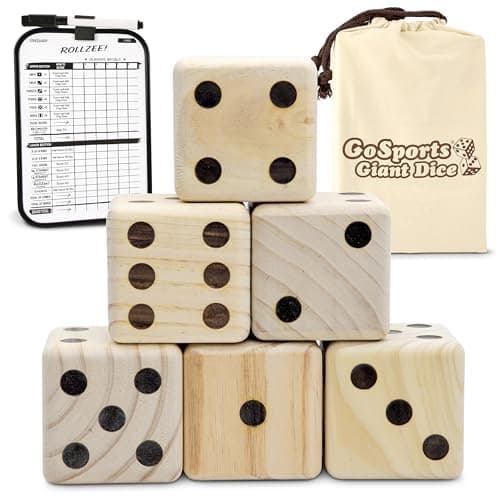
GoSports Giant 3.5 in Wooden Playing Dice Set
GoSports
Six 3.5 in hand-sanded pine dice with heat-stamped numbers that will not rub off, plus a dry-erase scoreboard and a canvas bag.
Skip this if
Skip this if your lawn slopes. Giant dice roll further than you expect and a slope turns every throw into a search.
Price as of October 19, 2026. #ad How we make money
FAQ
Questions people actually ask
Can you play giant Jenga on grass?
How much space do giant yard dice need?
Which is better for young children?
What do you actually play with giant dice?
Why you can check our work
We have not played these. Every figure above is copied from a manufacturer's published listing or a governing body's published rules, and named so you can verify it. Where a maker publishes nothing, the field is blank rather than filled in. How we pick explains the whole method, including what would change a recommendation.
Read next
Related pages

Picks
Compare yard games
Twenty-one head-to-heads with the verdict first and the published specs behind it.
Picks
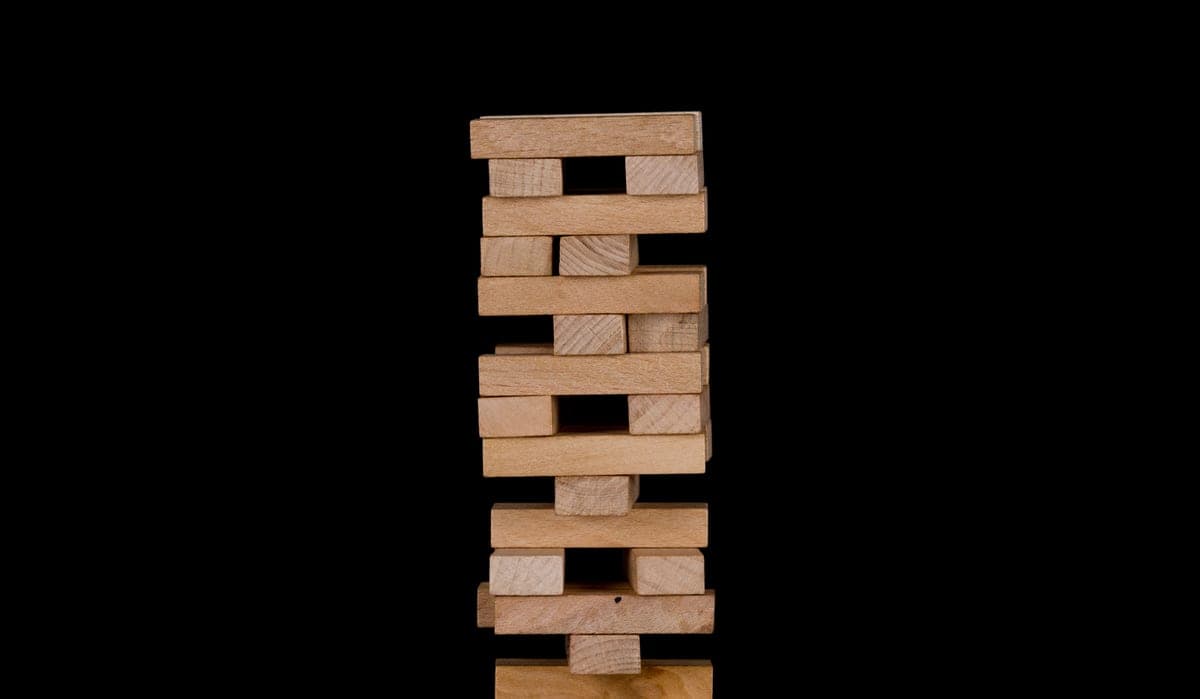
Best giant Jenga sets
Four tower sizes with published block dimensions, row counts and age floors — including one for a patio.
Picks
Giant yard dice
Six 3.5 inch pine dice with heat-stamped numbers and a scoreboard — any number of players, about 8 by 8 feet.
Comparison
Giant Jenga vs giant connect four
A crowd game that needs a hard base, versus a two-player game with a complete spec sheet.
Guide
Giant Jenga rules
How to build and play a stacking tower, published age floors, and what counts as a fall.
Guide
Giant games, wind and weather
Wind, soft ground and damp — what actually ruins a giant game, and how to set up around it.
Sources
Every figure on this page is copied from one of these sources. If you find one that is wrong or out of date, tell us and we will fix it.