
Giant games have an unusual life cycle. They are bought for a specific event, used intensely for an afternoon, and then stored for most of a year. Which means storage, not play, is what most of a giant game's life consists of — and it is where they get damaged.
All of these games are wood: Yard Games publishes sustainably sourced New Zealand pine for its Timbers and 4-in-a-row lines, and Jenga GIANT publishes premium hardwood. Wood moves with moisture. Everything below follows from that.
What actually goes wrong
The three things that damage a stored wooden game
1. Being put away damp
This is the big one and it is entirely avoidable. A nylon carrying case is close to airtight, so blocks that went in slightly damp stay damp for months. The result is raised grain, sometimes mold, and blocks that no longer slide against each other cleanly.
Lay everything out until it is genuinely dry before it goes in the case. Dew counts as damp. Evening lawns count as damp.
2. Repeated humidity cycling
Wood takes on and gives off moisture with the air around it, and it does not do so evenly — one face dries faster than another, and the block cups. A shed that swings from cold and damp to hot and dry every day is the worst realistic storage location for this reason. A garage is much more stable.
3. Stored under load, or on end
Fifty-six blocks standing on their ends in a bag lean on one another for eleven months. Stack them flat, as they came, and do not stack anything heavy on top of the case.
Realistic options
Where to store, ranked
| Location | Verdict | Why |
|---|---|---|
| Indoor closet or under a bed | Best | Stable temperature and humidity; the wood does nothing at all |
| Garage, off the floor | Very good | Cool and stable; keep the case on a shelf, not on concrete |
| Basement, if dry | Good | Very stable temperature; a dehumidifier settles the question |
| Dry shed | Acceptable | Workable if genuinely dry, but sheds swing hard day to day |
| Attic | Poor | Extreme summer heat dries wood unevenly and opens joints |
| Outdoors under a tarp | Bad | A tarp traps condensation against the wood — worse than no cover |
The tarp line is the counter-intuitive one. A tarp over a wooden game stops rain and then traps every bit of ground moisture that evaporates underneath it. That is a worse environment than open air, and it is how people discover their set has gone green.
Specifics
Storing each type
Stacking tower blocks
Flat, in the supplied nylon case, stacked in the shape they were in on the tower. Every Yard Games Timbers size ships with a case; if yours has lost it, a flat crate is better than a bag.
Giant 4 in a row
The Yard Games set publishes 33 by 3 by 22 inches overall at 14.5 pounds, with a carrying case. Store the frame flat rather than standing on its legs — standing on legs for a year puts constant point load on the joints.
Count the coins before storing. The set publishes 42, and a game missing four is a game that ends early.
Yard dice
The easiest of the three. Six pine dice in a canvas bag, anywhere dry. Heat-stamped numbers do not rub off, so the only risk is moisture raising the grain.
For the outdoor-conditions side of this, giant games, wind and weather covers what happens during the party rather than after it.
What we would buy
The gear behind this guide
The sets whose published specifications this page is built on. Ranked on spec completeness and footprint clarity, not on testing we have not done.
Best overall
Yard Games Giant Tumbling Timbers
Yard Games
56 sustainably sourced New Zealand pine blocks at 1.5 x 2.5 x 7.5 in, starting at 2.5 ft over 19 rows and reaching 5 ft, in a nylon case.
Skip this if
Skip this if the only flat ground you have is a lawn. A 19-row tower needs a hard, level base — grass tips it before anybody pulls a block.

Best overall
Yard Games Giant 4 in a Row
Yard Games
A 31 x 23 in wooden board on finished legs with 42 coins at 3.5 in and a carry case, at a published 14.5 lb — the giant game that actually fits on a deck.
Skip this if
Skip this if you were picturing a four-foot-tall board. This one is roughly waist height, which is why it packs down and the tall ones do not.
FAQ
Questions people actually ask
How do you store giant Jenga blocks?
Can you store wooden yard games in a shed?
Can you store wooden games in a garage?
Do giant games need to be dried before storing?
Why you can check our work
We have not played these. Every figure above is copied from a manufacturer's published listing or a governing body's published rules, and named so you can verify it. Where a maker publishes nothing, the field is blank rather than filled in. How we pick explains the whole method, including what would change a recommendation.
Read next
Related pages
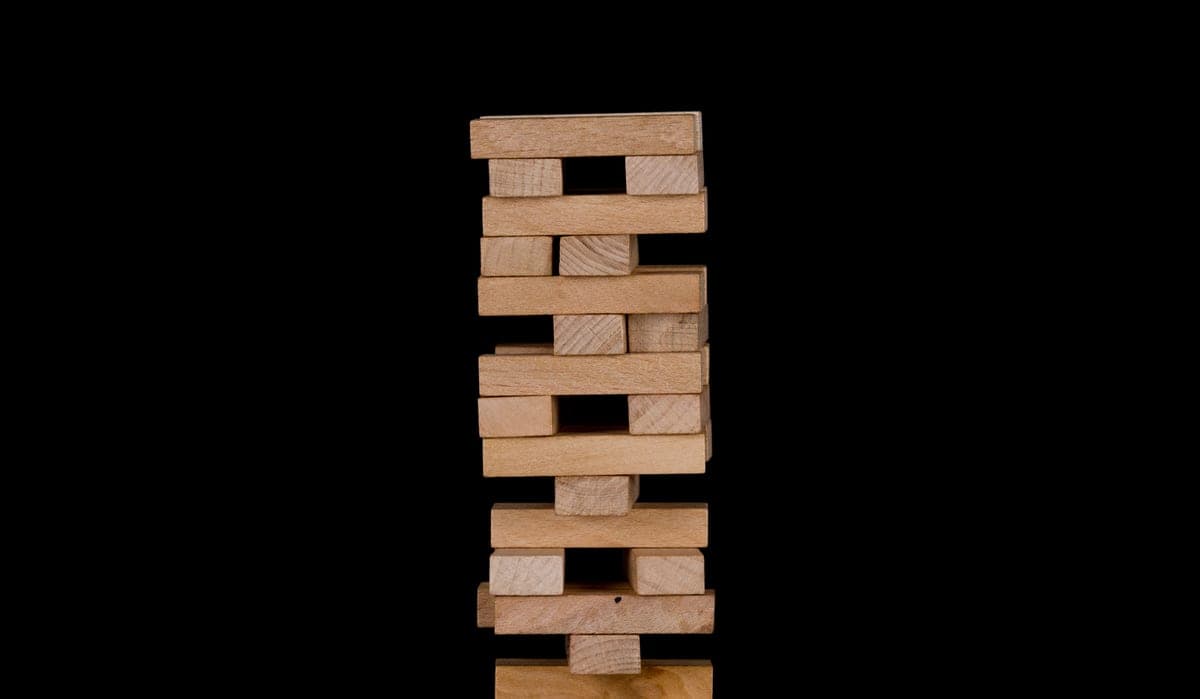
Guide
Is giant Jenga worth it?
Photographed at every party, stored in every garage — the four questions that decide which it will be.
Picks
Yard game guides
Rules, regulation dimensions, materials and storage — sourced from governing bodies and makers.
Picks
Best giant yard games
Stacking towers, giant 4 in a row and yard dice — ranked on published dimensions, weight and age floor.
Guide
Giant games, wind and weather
Wind, soft ground and damp — what actually ruins a giant game, and how to set up around it.
Guide
Weatherproof yard games
Every game ranked on what actually happens when it is left outside, by published material.
Picks
Best giant Jenga sets
Four tower sizes with published block dimensions, row counts and age floors — including one for a patio.
Sources
Every figure on this page is copied from one of these sources. If you find one that is wrong or out of date, tell us and we will fix it.