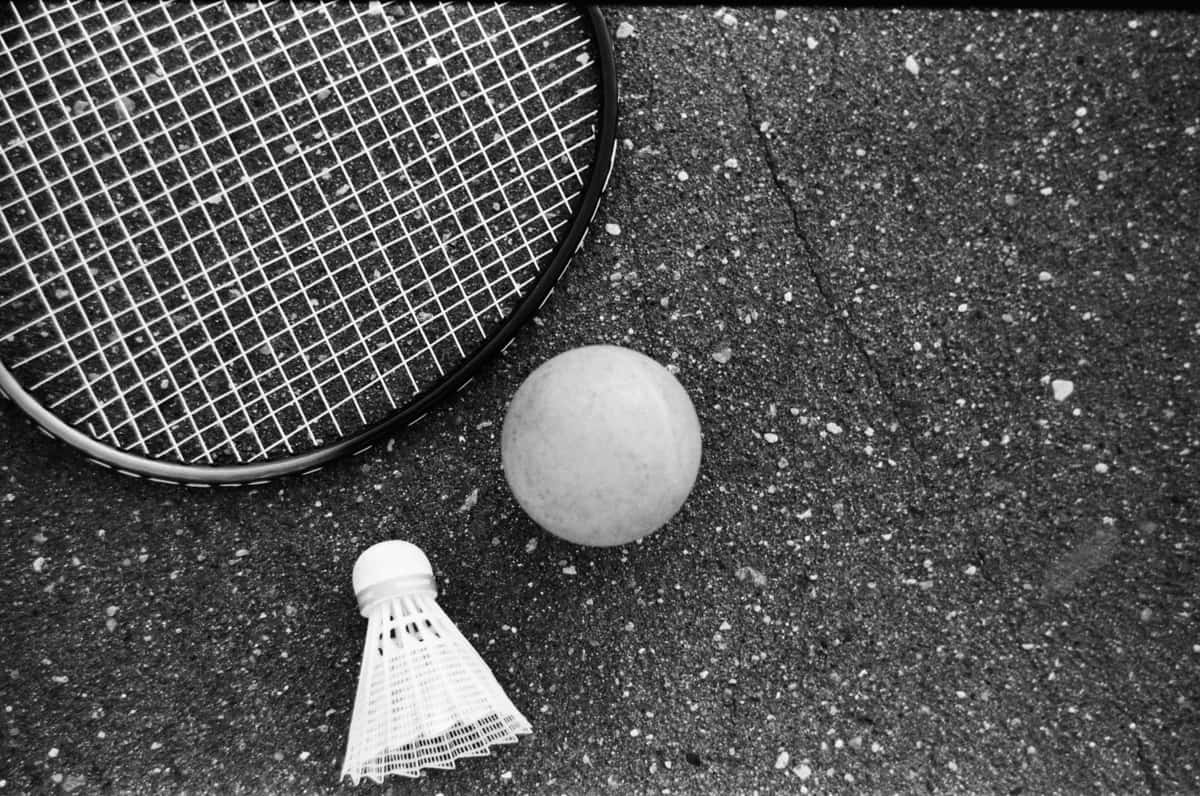
The published specs
Side by side
| Spikeball | Badminton | |
|---|---|---|
| Footprint | About 30 x 30 ft (about 900 sq ft) | 44 x 20 ft (880 sq ft) full doubles |
| Casual footprint | Same — the game has no boundary | About 30 x 15 ft for rallying |
| Shape needed | Open in every direction | A rectangle, one direction |
| Core geometry | 3 ft net, 15 ft service circle | A net across the middle |
| Players | 4 (2 v 2) | 2 or 4 |
| Projectile | 12 in circumference inflated ball, about 3.8 in diameter | Shuttlecock, a few grams |
| Wind tolerance | Good — the ball holds a line | Very poor — rallies end |
| Playable surface | Grass, sand, hard | Short grass, hard |
| Physical demand | High — diving is normal | Moderate |
| Learning curve | Several sessions before rallies last | Immediate |
| Governing body | International Roundnet Federation | Manufacturer set, casual play |
The thing that decides it
Wind is the whole comparison
Almost everything written about backyard badminton treats wind as a footnote. It is the headline. A shuttlecock is engineered for an indoor hall: it weighs a few grams, it flies nose-first and decelerates hard, and every one of those properties makes it exquisitely sensitive to moving air. A breeze you would not notice on your face pushes a shuttle several feet sideways over a 20-foot flight.
The practical consequence is that outdoor badminton is a morning and evening game in most yards, and unplayable in the middle of a breezy afternoon — which is exactly when a party happens.
Spikeball's ball is 12 inches in circumference, about 3.8 inches across, and inflated to a pressure the kit publishes a gauge for. It is the same class of object as a small volleyball and behaves like one. Wind affects it about as much as it affects a tennis rally, which is to say noticeably but not fatally.
If you are choosing a game for an open lawn, a rooftop, a beach or anywhere near water, this alone should settle it. See beach and sand games.
Measure both
Shape: a square versus a rectangle
These two look similar on an area table — 900 square feet against 880 — and are completely different to fit.
Badminton is directional. A full doubles court is 44 by 20 feet and everything happens along its length. A long, narrow garden takes it. Casual rallying works in about 30 by 15 feet, so the real minimum is smaller than the published court.
Spikeball is not directional at all. Roundnet has no boundary: the ball comes off a 3-foot net at whatever angle it comes off, and players follow it. The published 30 by 30 feet is not a court, it is a clearance radius. A narrow yard does not shrink the game, it interrupts it — the rally stops when someone reaches a fence.
So measure your width for Spikeball and your length for badminton. The full comparison table for every game we cover is in how much space do yard games need.
Decision
Pick Spikeball if…
- Your space is open in every direction rather than long and narrow.
- The yard is exposed, or you are heading to a beach.
- You have four players who want a game with a real skill ceiling.
- You want the version with a governing body and sanctioned tournaments.
Set comparison: Spikeball Pro vs Standard. Against the other four-player yard game, Spikeball vs Kan Jam.
Pick badminton if…
- Your lawn is sheltered by fencing, hedging or buildings.
- Guests should be rallying within seconds of picking up a racket.
- You want a game that works with two people as well as four.
- You mostly play in the evening, when the air drops.
Full page: badminton sets. For the whole category, net and active games.
The other side
Where to buy the other one
The card at the top of this page covers one side of the comparison. This is our current pick for the other, ranked on published specifications rather than on play we have not done.

Best overall
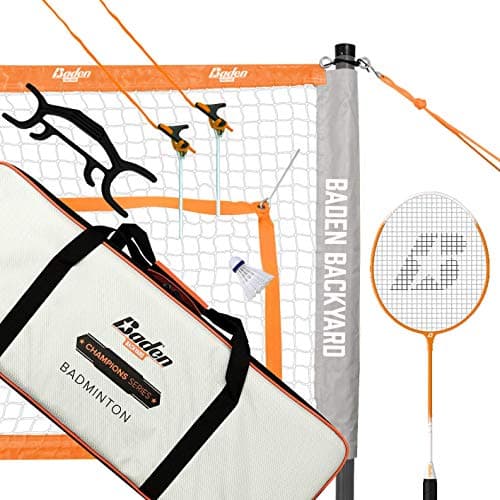
Baden Champions Badminton Set
Baden
A complete portable net-and-racket set from the same Champions line as the bocce — the fastest way to put a net on a lawn without digging anything in.
Skip this if
Skip this if the lawn is windy. A shuttlecock is the lightest projectile in yard games and a 10 mph breeze ends the game.
Price as of October 19, 2026. #ad How we make money
FAQ
Questions people actually ask
Does badminton work outdoors?
How much space does Spikeball need?
Which is better for casual guests?
How many people can play each one?
Why you can check our work
We have not played these. Every figure above is copied from a manufacturer's published listing or a governing body's published rules, and named so you can verify it. Where a maker publishes nothing, the field is blank rather than filled in. How we pick explains the whole method, including what would change a recommendation.
Read next
Related pages

Picks
Compare yard games
Twenty-one head-to-heads with the verdict first and the published specs behind it.
Picks
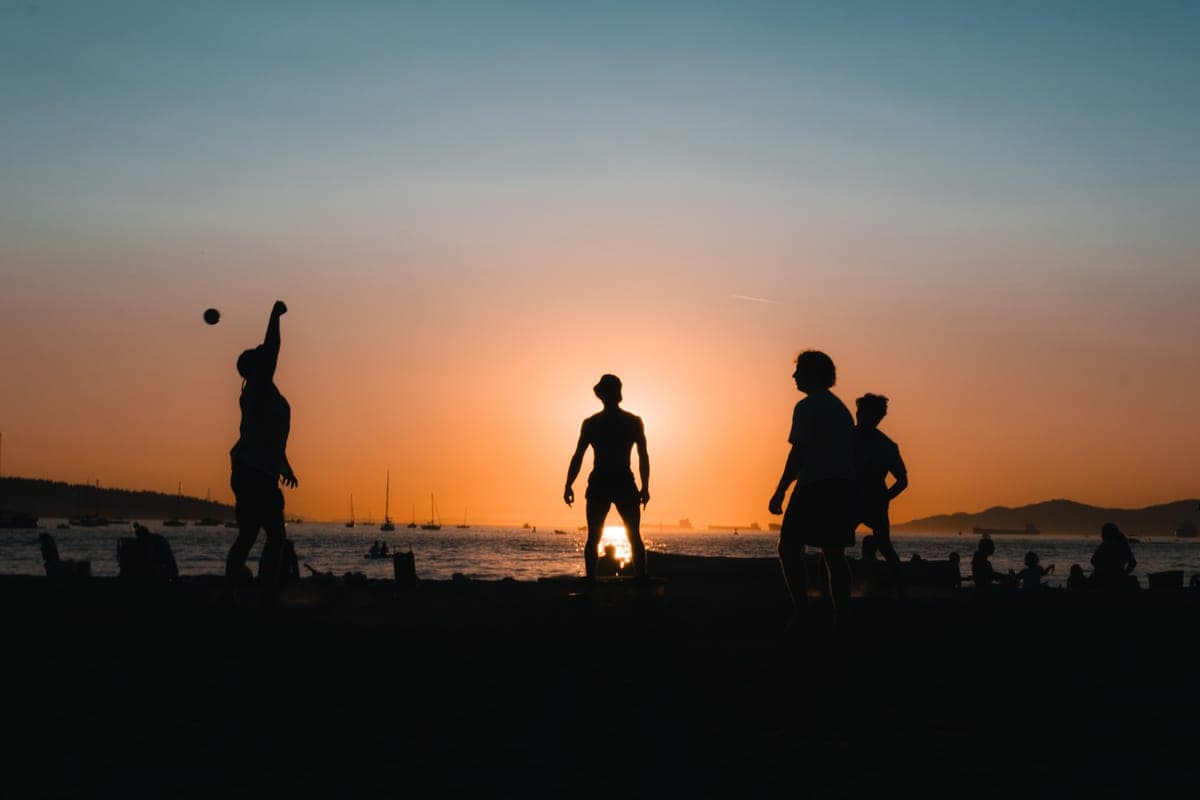
Spikeball sets
Pro versus Standard on published rim strength, ball type and included pump — the same game either way.
Picks
Backyard badminton sets
Portable net, rackets and shuttlecocks — the gentlest net game, with an honest wind caveat.
Comparison
Spikeball vs Kan Jam
Two four-player games with opposite space requirements — a square versus a corridor.
Picks
Best yard games for big lawns
The games that need 60 feet or more — and finally work when you have it.
Picks
Best yard games for adults
Five games with a real skill ceiling and a governing body behind the specification.
Sources
Every figure on this page is copied from one of these sources. If you find one that is wrong or out of date, tell us and we will fix it.