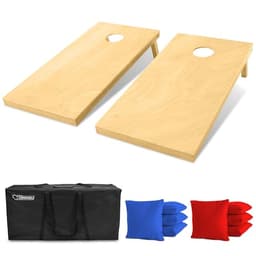
These two turn up at the same parties and get bought for the same reason, but they are not really competing. One is a target sport with a published court. The other is a 50-block tower that everybody watches and nobody owns.
The spec sheet
The published figures
| Cornhole | Giant Jenga | |
|---|---|---|
| Governing body | ACL | None |
| Footprint | 33 ft x 10 ft (about 330 sq ft) | About a yard, plus falling room |
| Board or blocks | 4 ft x 2 ft boards, 27 ft apart | 56 blocks, 1.5 x 2.5 x 7.5 in |
| Start and end height | n/a | Starts 2.5 ft, reaches 5 ft |
| Rows | n/a | 19 |
| Players | 2 or 4 | 2 or more |
| Set weight | 38 lb | Not published |
| Surface | Any flat ground | Flat and firm, or the tower leans |
In play
What each one is actually for
Cornhole is a skill you keep
The same throw at the same target for an hour, and the pleasure is watching your own percentage climb. It rewards ownership: the people who play a lot get visibly better, which is why it sustains leagues. See the boards worth buying.
Giant Jenga is an event
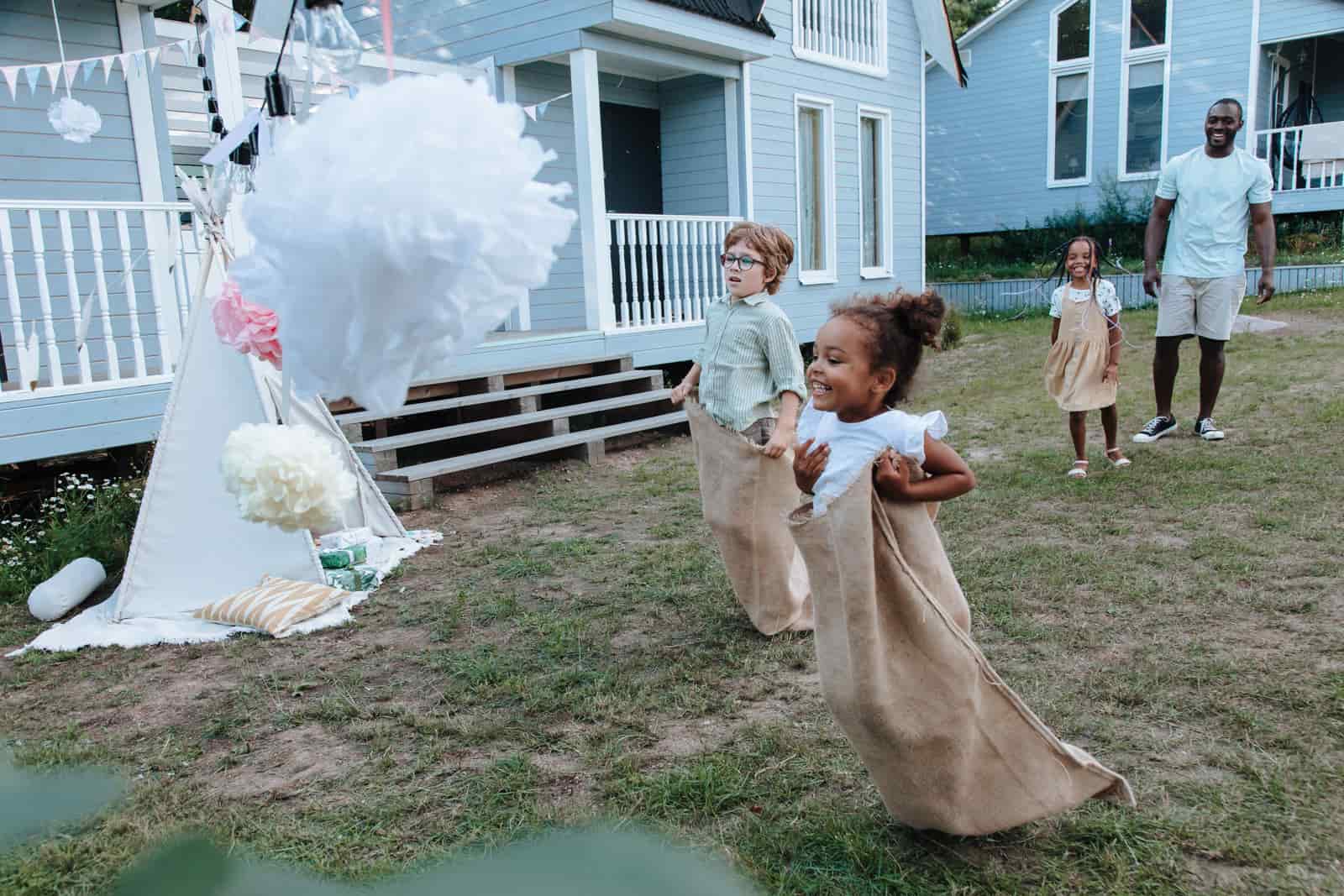
Nobody practices giant Jenga. What it does is gather twelve people around a tower at 5 feet and hold their attention for the ninety seconds before it falls — then reset and do it again. That is a completely different job, and it is the one most parties need. See giant Jenga sets.
The queue is the deciding factor
Cornhole published for 2 or 4 means a fifth person waits. Giant Jenga has no player limit because turns are seconds long. At a gathering of twenty, that difference is the whole evening — see how many yard games for a party.
The other side
Where to buy the other one
The card at the top of this page covers one side of the comparison. This is our current pick for the other, ranked on published specifications rather than on play we have not done.
Best overall
Yard Games Giant Tumbling Timbers
Yard Games
56 sustainably sourced New Zealand pine blocks at 1.5 x 2.5 x 7.5 in, starting at 2.5 ft over 19 rows and reaching 5 ft, in a nylon case.
Skip this if
Skip this if the only flat ground you have is a lawn. A 19-row tower needs a hard, level base — grass tips it before anybody pulls a block.
FAQ
Questions people actually ask
Which is better for a big party, cornhole or giant Jenga?
How much space does each one need?
Which lasts longer outdoors?
Why you can check our work
We have not played these. Every figure above is copied from a manufacturer's published listing or a governing body's published rules, and named so you can verify it. Where a maker publishes nothing, the field is blank rather than filled in. How we pick explains the whole method, including what would change a recommendation.
Read next
Related pages

Picks
Compare yard games
Twenty-one head-to-heads with the verdict first and the published specs behind it.
Picks
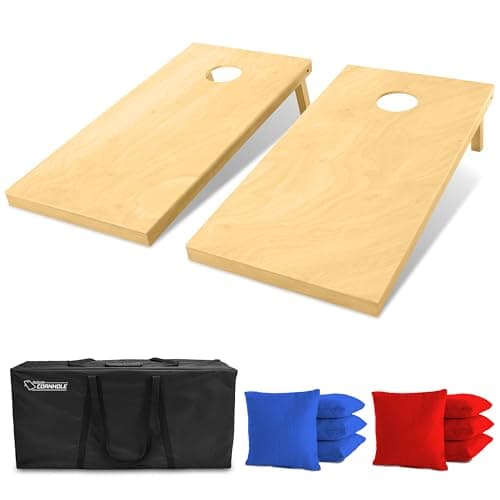
Best cornhole boards
Five regulation sets ranked on published surface thickness, frame construction, weight and bags.
Picks
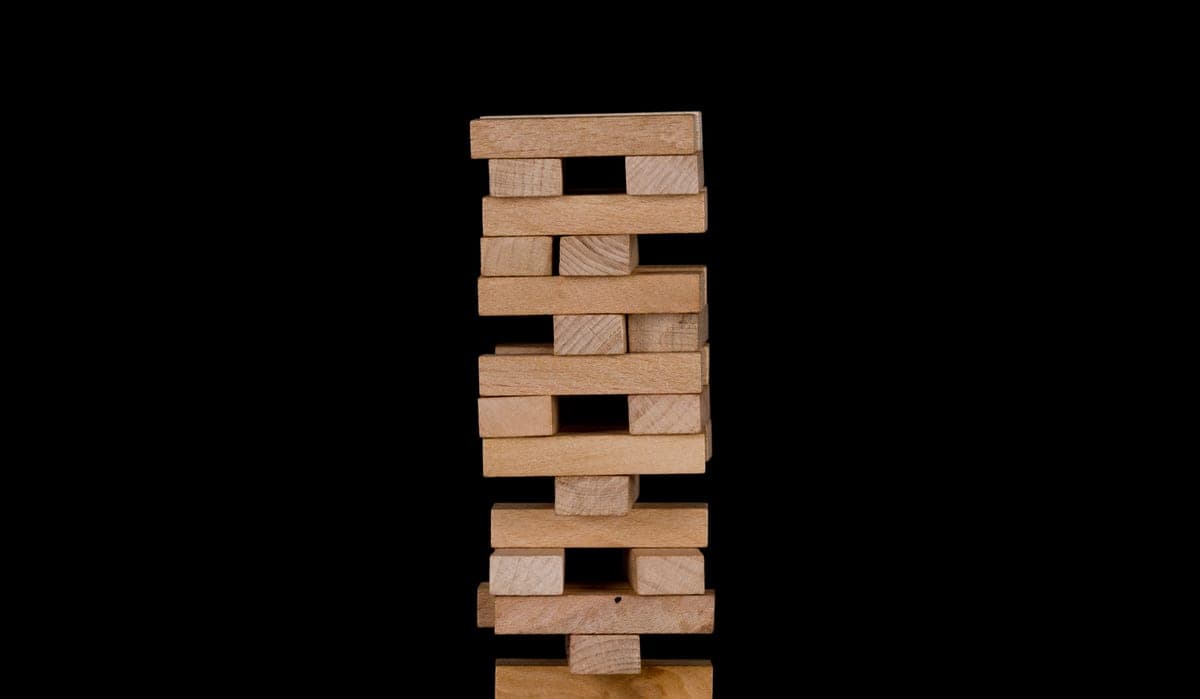
Best giant Jenga sets
Four tower sizes with published block dimensions, row counts and age floors — including one for a patio.
Comparison
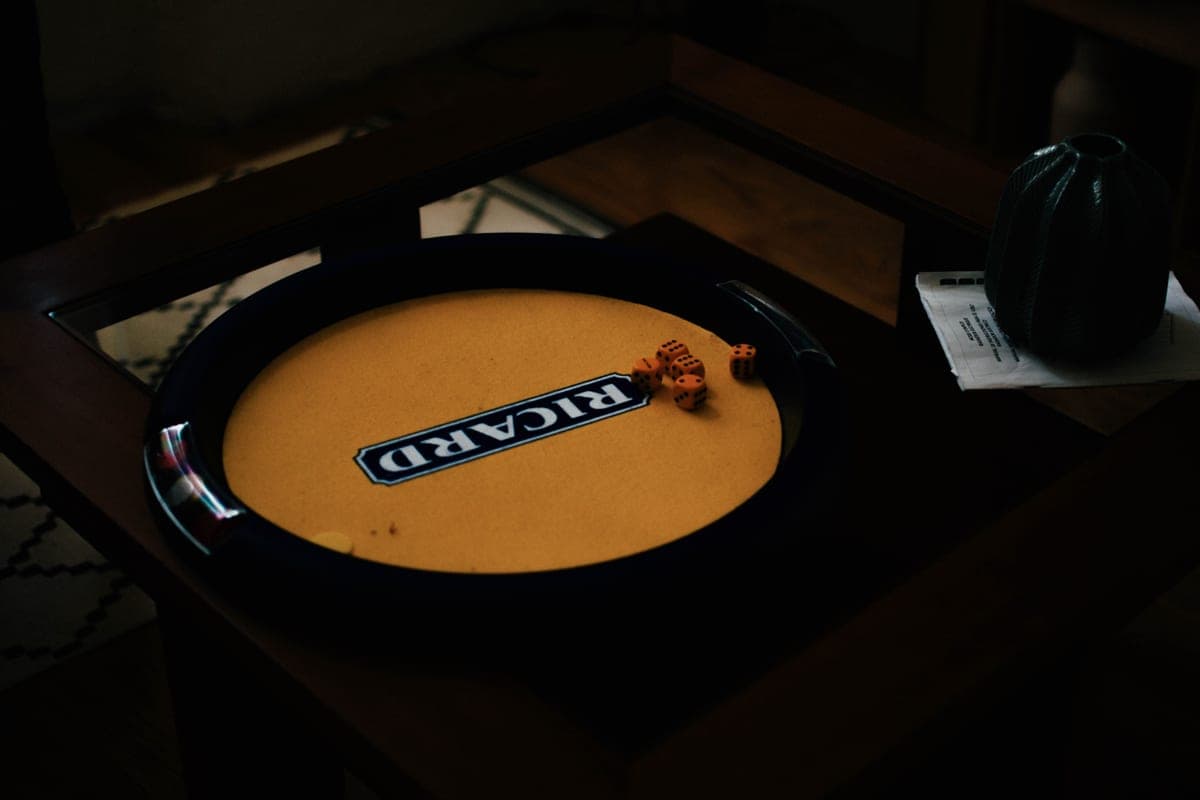
Giant Jenga vs yard dice
A 19-row tower that needs hard level ground against six dice that roll anywhere.
Guide
How many yard games do you need for a party?
Turning a guest count into an actual number of games, using published player counts.
Sources
Every figure on this page is copied from one of these sources. If you find one that is wrong or out of date, tell us and we will fix it.