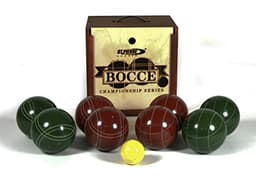
The published specs
Side by side
| Cornhole | Bocce | |
|---|---|---|
| Footprint | 33 x 10 ft (about 330 sq ft) | About 60 x 12 ft backyard; 86.92 x 13.12 ft regulation |
| Core distance | 27 ft board front to board front — fixed | However far you throw the pallino |
| Can you shorten it? | No — the distance is the skill | Yes, freely |
| Playable surfaces | Grass, hard, sand | Grass, sand, gravel, dirt |
| Ground must be level? | Both boards must match each other | No |
| Players | 2 or 4 | 2 to 4, commonly played in teams |
| Scoring | 3 in the hole, 1 on the board, cancellation to 21 | Closest ball to the pallino |
| Round length | Short | Medium |
| Set weight | 38 lb (GoSports) to 46 lb (Victory Tailgate) | Not published; Baden publishes 2 lb per 107 mm ball |
| Material | Plywood or MDF on a wooden frame | Solid resin |
| Weather | Boards must be stored dry | Indifferent |
| Plays after dark | With the boards lit | Yes — LED sets exist |
| Governing body | American Cornhole League | United States Bocce Federation |
Why this is not a space comparison
The fixed distance is the whole argument
On an area table bocce looks like the bigger commitment — about 720 square feet against 330. In a real yard it is the opposite, and the reason is that only one of these two numbers is a rule.
The ACL specifies boards 27 feet apart, front to front. That distance is the game: it is what makes the slide shot difficult and what a player's muscle memory is built on. Shorten it and you have made cornhole easy rather than smaller. Add a 4-foot board and a pitcher's box at each end and you need about 33 feet, and there is no negotiating it.
Bocce has no equivalent. The USBF publishes a regulation court at 86.92 feet, backyard play typically runs about 60, and nothing stops you throwing the pallino 30 feet instead. A shorter bocce court is a tighter, more tactical game — not a compromised one.
So the honest question is not “which needs more space”. It is do you have 33 feet of clear run. If yes, both work. If no, only one does. Pace it out — an adult pace is about two and a half feet, so thirteen paces is your answer. Full footprint table: how much space do yard games need.
Living with them
Ownership: one of these has failure modes
Bocce is eight resin balls and a pallino. There is nothing to break, nothing to store carefully, nothing that minds rain, and no maintenance of any kind. The only genuine risk is losing the pallino.
Cornhole is two large wooden objects with a published weight of 38 to 46 pounds and a playing surface that fails predictably. Cabinet-grade plywood delaminates; MDF swells irreversibly the first time it gets properly wet. The frames are pine and the legs run on bolts that need an occasional check. Bags wear out and need replacing. None of that is a defect — it is what a large wooden object used outdoors is like — but it is a real ownership burden that bocce simply does not have.
Detail on both: cornhole board materials, how to look after cornhole bags, and wood vs plastic yard games.
Decision
Pick cornhole if…
- You have 33 feet of clear, roughly level run.
- You have somewhere dry to store two large boards.
- Your gatherings are crowds that need a fixture rather than a pastime.
- You want the game with a rulebook, a league structure and a competitive path.
Set comparison: best cornhole sets. If the yard is too short, the substitute with the same properties is ladder toss.
Pick bocce if…
- Your ground is uneven, gravelly, sandy or not really a lawn.
- Storage is limited, or the set will live outside.
- Players span a wide age range — see bocce ball sizes.
- You want to be playing thirty seconds after walking outside.
Set comparison: best bocce sets. Against the other crowd game, bocce vs kubb.
The other side
Where to buy the other one
The card at the top of this page covers one side of the comparison. This is our current pick for the other, ranked on published specifications rather than on play we have not done.

Best overall
GoSports 4 ft x 2 ft Solid Wood Premium Cornhole Set
GoSports
Regulation 4 x 2 ft boards on solid pine frames with a 1/2 in cabinet-grade plywood top, eight 16 oz all-weather bags and a case — the complete tournament-legal setup in one box.
Skip this if
Skip this if your yard is under 30 ft long. A regulation court is 27 ft board-front to board-front plus throwing room behind each board, and there is no shortening it without changing the game.
Price as of October 19, 2026. #ad How we make money
FAQ
Questions people actually ask
Should I buy cornhole or bocce first?
Which is better at a party?
Which needs more space?
Which lasts longer?
Why you can check our work
We have not played these. Every figure above is copied from a manufacturer's published listing or a governing body's published rules, and named so you can verify it. Where a maker publishes nothing, the field is blank rather than filled in. How we pick explains the whole method, including what would change a recommendation.
Read next
Related pages

Picks
Compare yard games
Twenty-one head-to-heads with the verdict first and the published specs behind it.
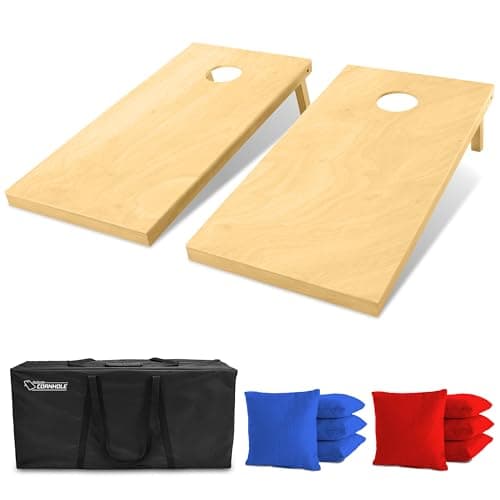
Picks
Best cornhole boards
Five regulation sets ranked on published surface thickness, frame construction, weight and bags.
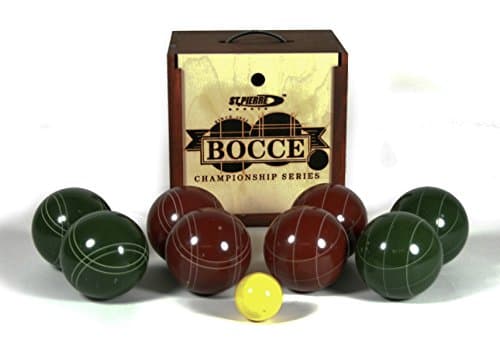
Picks
Best bocce ball sets
Six sets compared on published ball diameter, material and weight — including the size question nobody explains.
Comparison
Cornhole vs ladder toss
33 feet and 38 pounds versus 20 feet and a nylon bag — the first-yard-game decision.
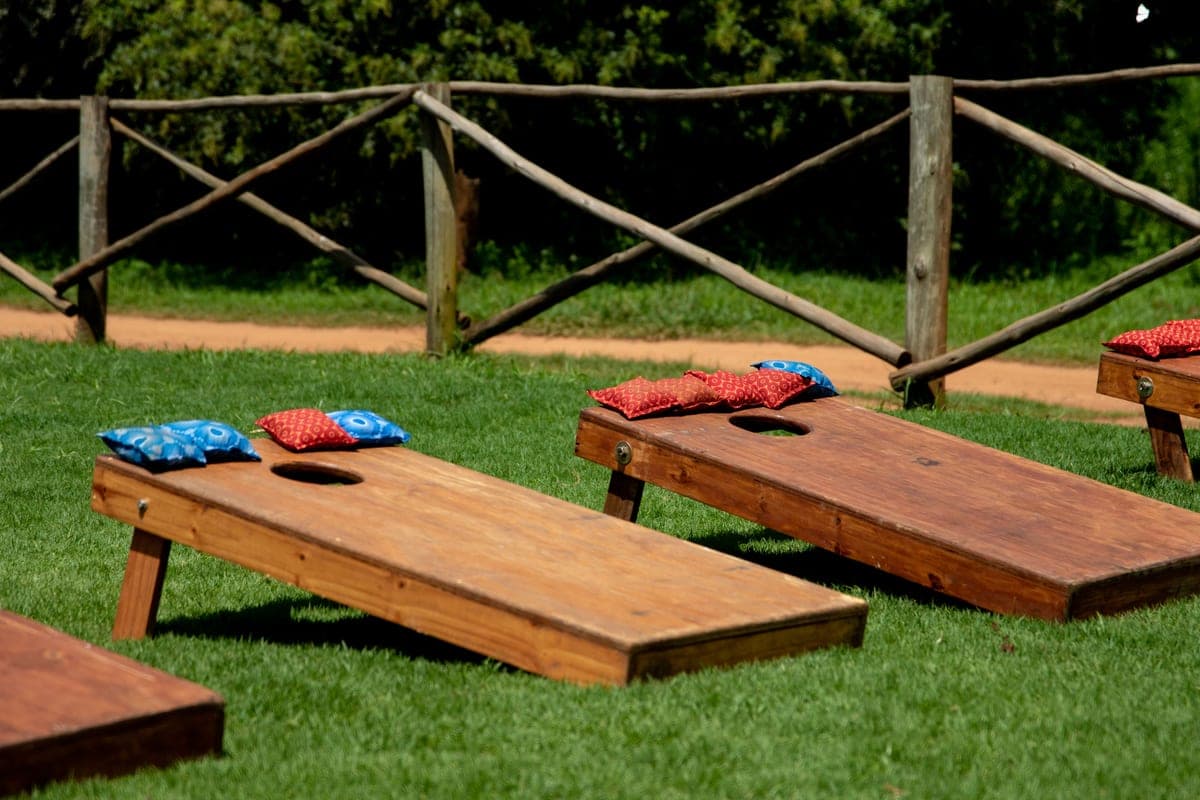
Guide
Best yard games for beginners
The first game to own — forgiving, quick to learn, and hard to get bored of.
Sources
Every figure on this page is copied from one of these sources. If you find one that is wrong or out of date, tell us and we will fix it.