Yard games sit in an awkward gap. They are not toys, so they are not marketed with the age labelling toys carry; and they are not sports equipment, so they do not come with the protective conventions that go with a bat or a helmet. The result is that most of them publish nothing about age at all.
This page collects what is published, and gives you a way to judge the rest that does not involve us inventing a number.
The facts, such as they are
What is actually published
| Set | Published age floor | Source |
|---|---|---|
| Yard Games Giant Tumbling Timbers (2.5 ft) | 8+ | Manufacturer listing |
| Yard Games Large Tumbling Timbers (2 ft) | 8+ | Manufacturer listing |
| Yard Games Large Jr. Tumbling Timbers (21 in) | 8+ | Manufacturer listing |
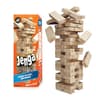
| Jenga GIANT hardwood | 12+ | Manufacturer listing |
| Cornhole sets | Not published | — |
| Bocce sets | Not published | — |
| Kubb sets | Not published | — |
| Kan Jam | Not published | — |
| Spikeball | Not published | — |
| Horseshoes | Not published | — |
| Giant 4 in a row | Not published | — |
| Giant yard dice | Not published | — |
That table is mostly empty, and we are not going to fill it in. An age floor invented by a publisher is indistinguishable on the page from one set by the manufacturer who tested the product, and the second one is worth something.
What actually causes injuries
The three real hazards in this category
1. Mass, thrown
This is the one that matters most and it varies enormously. The NHPA sets the horseshoe limit at no more than 2 pounds 10 ounces of drop-forged steel, pitched overhand across 27 to 37 feet into a pit. A full-size bocce ball publishes 2 pounds, but it is rolled underarm along the ground. A cornhole bag is 16 ounces of fabric, thrown in an arc. A Spikeball is inflated and weighs almost nothing.
Those are four completely different risk profiles, and only the first one should change who is allowed in the yard while it is being played.
2. Height, falling
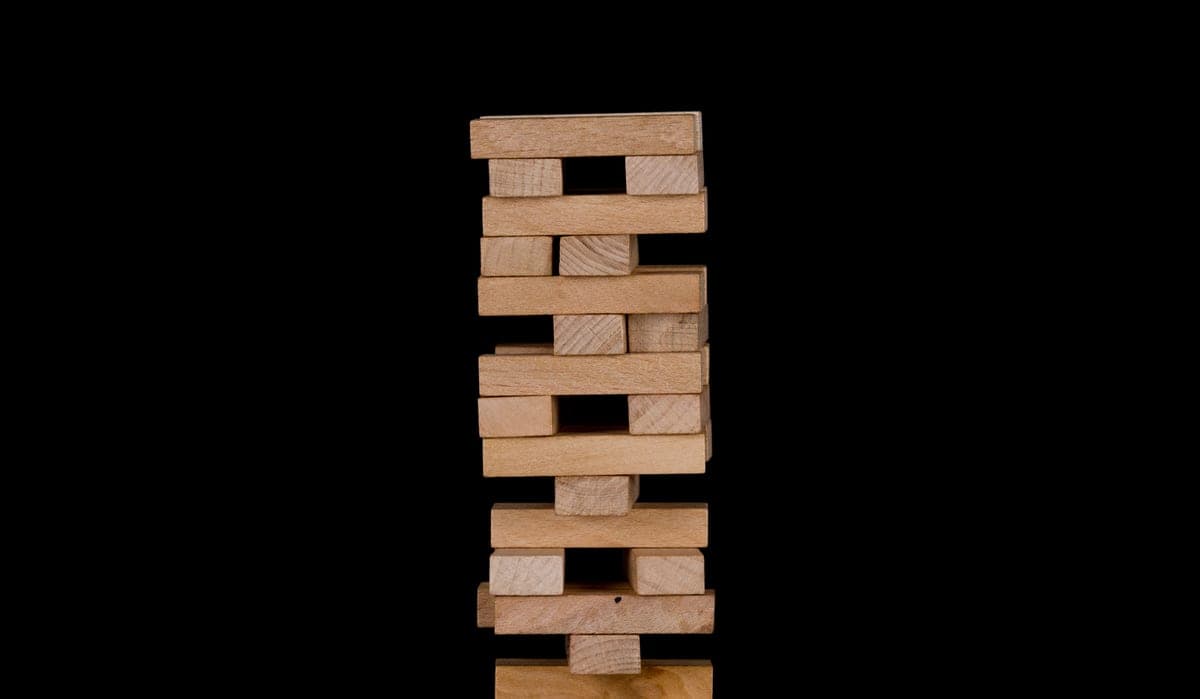
A giant stacking tower starts at 2.5 feet and reaches over five in play. When it goes, 56 pine blocks come down and scatter — which is why the published footprint is about 10 by 10 feet of clear space rather than the size of the tower. That figure is a fall radius. Treat it as one.
3. The ground
Underrated, and the cause of most of the minor injuries. Spikeball involves diving as normal play, and roundnet is published for grass, sand and hard surfaces — the equipment is fine on concrete and the players are not. Uneven ground and long grass hide the holes that turn ankles.
A method
Judging a game with no published figure
Where nothing is published, three visible properties get you most of the way:
- What is the heaviest single object, and is it thrown? Anything above a pound thrown at distance deserves adult supervision. Anything metal is a different category entirely.
- How far does it travel? A game with a published 15-foot toss distance is easier to supervise than one with goals 50 feet apart, simply because you can see the whole thing.
- Can a child reach the part of the game that matters? This is the subtle one and it is not a safety question so much as a fairness one. A stacking tower's endgame happens at four or five feet. A child who cannot reach it is not playing, however low the published age floor is.
That last point is why the 21-inch junior tower exists and why it carries the same 8+ rating as its bigger siblings — it changes reach, not risk. Comparison of all the sizes: giant Jenga sets.
A short list
The games to put away before a children's party
- Horseshoes. Steel, up to 2 pounds 10 ounces, pitched across 27 to 37 feet. There is no version of this that belongs at a party with children.
- The full-size hardwood stacking tower. Jenga GIANT publishes 12+, and a hardwood block falling from over five feet is the reason.
- Spikeball, if the surface is hard. The game is fine; concrete is not.
What to run instead is in yard games for a kids' birthday party and yard games for kids. For weather-related failure modes rather than injury ones, see giant games in wind and weather.
What we would buy
The gear behind this guide
The sets whose published specifications this page is built on. Ranked on spec completeness and footprint clarity, not on testing we have not done.
Best for younger players
Yard Games Large Jr. Tumbling Timbers (21 in)
Yard Games
54 blocks at 1.2 x 2 x 6 in over 18 rows, starting at 21 in — the smallest published size in the family and the one a shorter player can reach the top of.
Skip this if
Skip this if adults are the main players. Small blocks make an easy game, and easy stacking games end quickly.
Best hardwood build
Jenga GIANT Genuine Hardwood Game
Jenga
The licensed 54-block hardwood version, published as nearly 15 times the classic block size and stacking to more than 5 ft in play.
Skip this if
Skip this if there will be small children near the tower. The published age guidance is 12 and up, and a hardwood block falling from 5 ft is the reason.
Price as of October 19, 2026. #ad How we make money

Best overall
Yard Games Giant 4 in a Row
Yard Games
A 31 x 23 in wooden board on finished legs with 42 coins at 3.5 in and a carry case, at a published 14.5 lb — the giant game that actually fits on a deck.
Skip this if
Skip this if you were picturing a four-foot-tall board. This one is roughly waist height, which is why it packs down and the tall ones do not.

Best overall
St. Pierre Professional Horseshoe Set
St. Pierre
Drop-forged steel shoes built to the NHPA's published weight limit, which is the one spec that decides whether a shoe behaves like a competition shoe.
Skip this if
Skip this if children will be anywhere near the pits. A 2 lb 10 oz steel shoe thrown 40 ft is the most dangerous object on this website.
Price as of October 19, 2026. #ad How we make money
FAQ
Questions people actually ask
Which yard games publish an age floor?
What is the most dangerous yard game?
Why does a smaller giant Jenga set have the same age floor?
What should you do when a game publishes no age floor?
Why you can check our work
We have not played these. Every figure above is copied from a manufacturer's published listing or a governing body's published rules, and named so you can verify it. Where a maker publishes nothing, the field is blank rather than filled in. How we pick explains the whole method, including what would change a recommendation.
Read next
Related pages
Picks
Best yard games for toddlers and preschoolers
The four games that work under five, and the published age floors that actually exist.
Picks
Yard game guides
Rules, regulation dimensions, materials and storage — sourced from governing bodies and makers.
Picks
Best yard games for kids
Games chosen on published age floors and equipment weight, plus the ones to avoid outright.
Picks
Yard games for a kids' birthday party
Twelve children, two hours and no patience for rules — filtered on published age floors.
Picks
Best giant Jenga sets
Four tower sizes with published block dimensions, row counts and age floors — including one for a patio.
Guide
Giant games, wind and weather
Wind, soft ground and damp — what actually ruins a giant game, and how to set up around it.
Sources
- Consumer Product Safety Commission
- Yard Games — Giant Tumbling Timbers
- Jenga GIANT — genuine hardwood game
- NHPA — official rules and specifications
Every figure on this page is copied from one of these sources. If you find one that is wrong or out of date, tell us and we will fix it.