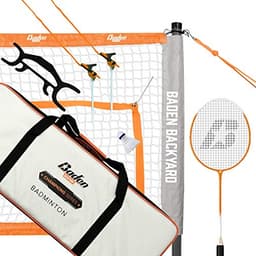
Badminton is the most yard-friendly net game there is. A casual court runs about 30 feet by 15, which is a third of what a volleyball boundary needs and narrow enough for a side yard. The equipment is light, the rackets are cheap, and a shuttlecock cannot break a window.
Which leaves the net as the only thing worth thinking hard about — and the thing most badminton sets quietly cheapen.
Published figures
The net spec that matters
| Element | Sport series | Professional series |
|---|---|---|
| Net | 21 ft L x 30 in H | 21 ft L x 30 in H |
| Net material | Nylon blend, 1 in top and bottom tapes | Nylon blend, 1 in tapes |
| Poles | 1 in, 3-piece steel | 1-1/2 in telescopic aluminum |
| Locking | Push-button | Push-button |
| Rackets | 4, steel shaft / aluminum head | 4, aluminum |
| Shuttlecocks | 3, nylon flights with cork tips | 3, nylon with cork tips |
| Ground stakes | 4, published as 10 in | 4, 10 in zinc-plated forged steel |
| Set weight | 9 lb | Not published |
| Bag | Reinforced denier with carrying straps | Polyester, zippered |
Note what is identical and what is not. The net itself — 21 feet by 30 inches — is the same across both tiers, because that is the regulation size and nobody varies it. What you pay more for is the poles: 1-inch steel versus 1-1/2 inch telescopic aluminum.
For badminton, that upgrade matters less than it does for volleyball. A shuttlecock weighs a few grams and puts essentially no load on the net, so a 1-inch steel pole holds a badminton span perfectly well. The aluminum version is lighter to carry and will not rust — worth it if the set lives in a car, not if it lives in a shed.
The other decision
Sleeve net or tie-on?
There are two ways a net attaches. A sleeve net has fabric pockets at each end that slide down over the poles — Park & Sun publishes 6-inch sleeved side pockets. A tie-on net uses cord at each corner.
Sleeves win for a yard set. Tension spreads evenly down the whole height of the net rather than pulling at four corners, setup is one motion per side, and there is nothing to re-tie when it loosens. Tie-on nets are easier to fit to poles of any diameter, which is the only reason they still exist.
Rackets and shuttles
What the rest of the set is worth
Almost all badminton sets ship four rackets and three shuttlecocks, and those are the parts you will replace first. Two things are worth knowing:
- Nylon shuttles with cork tips are the outdoor answer. Feather shuttles are faster and more precise and they destroy themselves outdoors in an afternoon. Park & Sun publishes nylon flights with pro cork tips, which is the right spec for a yard.
- Steel-shaft rackets bend permanently. An aluminum head on a steel shaft is the standard set racket and it is fine until someone swings at the ground. Buy the set for the net; upgrade rackets separately if the household gets keen.
The full rules, including what changes when you shorten the court for a yard, are in badminton rules. The main roundup for the game itself is badminton.
Honest limits
Wind is the real opponent
Badminton has the lightest projectile of any game on this site and it is therefore the most weather-sensitive. A shuttlecock in a 10 mph breeze is not a game of skill, and no net or racket upgrade fixes that.
If your yard is exposed, this is the wrong family and the honest alternative is a ground game — see coastal and windy yards. If the wind is occasional, set the court so the rally runs across the prevailing wind rather than into it, and accept that some afternoons are not badminton afternoons.
The picks in full
Every pick, with its published specs
Best overall
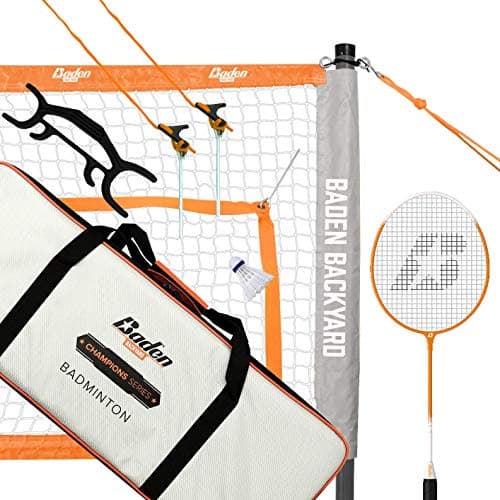
Baden Champions Badminton Set
Baden
Our spec score
6.8/10
- Spec completeness
- 4/10
- Footprint clarity
- 8/10
- Durability
- 6/10
- Pack-down
- 8/10
Scored on published specifications only. We have not played this set.
A complete portable net-and-racket set from the same Champions line as the bocce — the fastest way to put a net on a lawn without digging anything in.
Skip this if
Skip this if the lawn is windy. A shuttlecock is the lightest projectile in yard games and a 10 mph breeze ends the game.
What works
- Portable net with no ground anchoring required
- Everything to play in one box
What does not
- The listing does not publish net height or set weight
- Unusable in any real wind
Published specifications
- Footprint
- 44 ft x 20 ft (880 sq ft) for a full doubles court
- Backyard footprint
- About 30 ft x 15 ft for casual rallying
- Included
- Portable net, rackets and shuttlecocks
- Net height
- —
- Set weight
- —
- Players
- 2 or 4
- Surface
- Short grass, hard
Source: Badminton World Federation published court dimensions
Source: Derived from the published court length — a shortened court still needs run-back at both ends
Source: Baden product listing
Not published by the manufacturer.
Not published by the manufacturer.
Source: Badminton World Federation
Source: Badminton World Federation
Manufacturer listing: Baden Sports
Price as of October 23, 2026. #ad How we make money
FAQ
Questions people actually ask
How long is a badminton net?
Why does my badminton net sag in the middle?
Steel or aluminum badminton poles?
Can you use a badminton net for pickleball?
Why you can check our work
We have not played these. Every figure above is copied from a manufacturer's published listing or a governing body's published rules, and named so you can verify it. Where a maker publishes nothing, the field is blank rather than filled in. How we pick explains the whole method, including what would change a recommendation.
Read next
Related pages
Picks
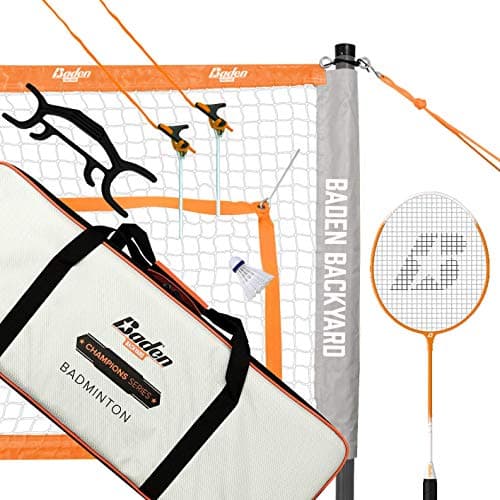
Backyard badminton sets
Portable net, rackets and shuttlecocks — the gentlest net game, with an honest wind caveat.
Picks
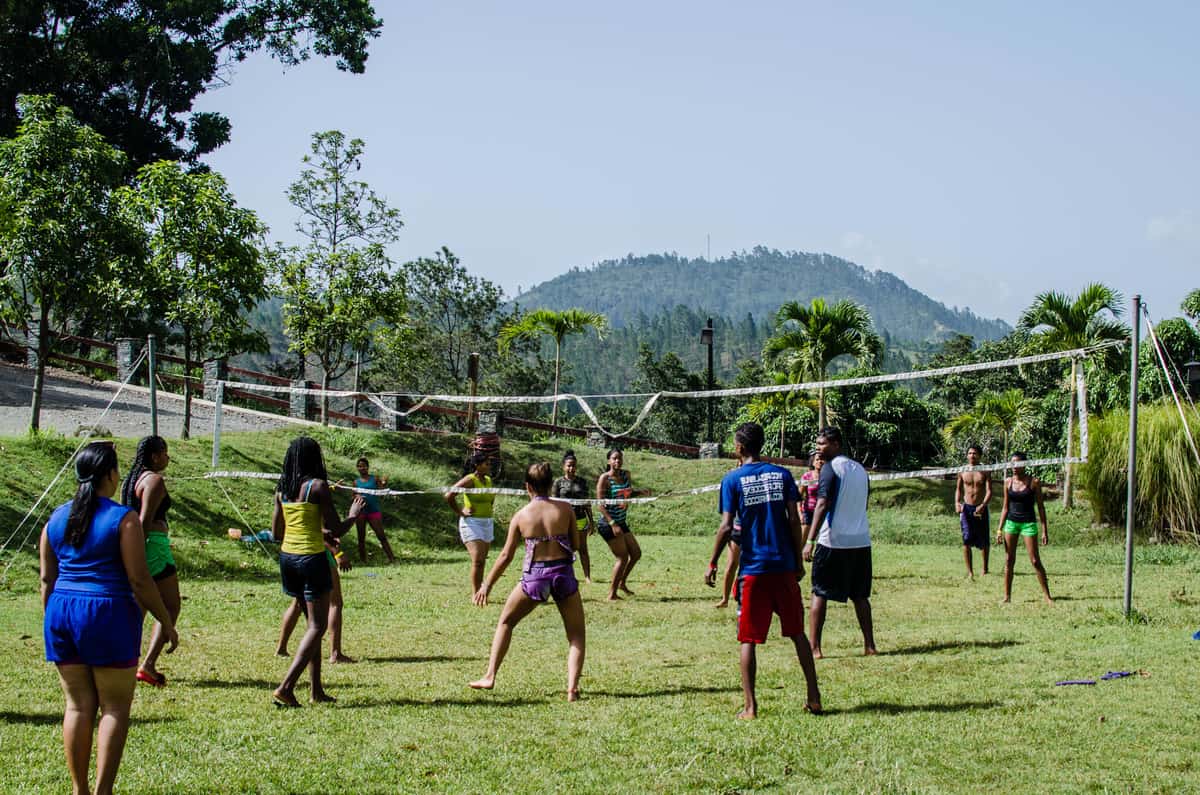
Net & active games
Spikeball and badminton — open-space games where fitness, not placement, decides the point.
Picks
Best volleyball net for a backyard
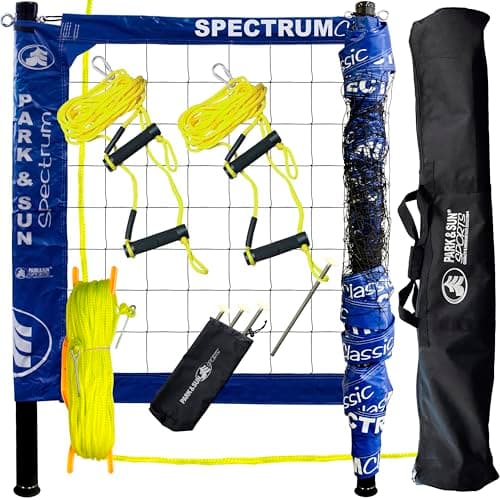
32 ft of net, a 60 by 30 ft boundary and a published 21 lb set weight — the most fully specified net system here.
Guide
Badminton rules for a backyard
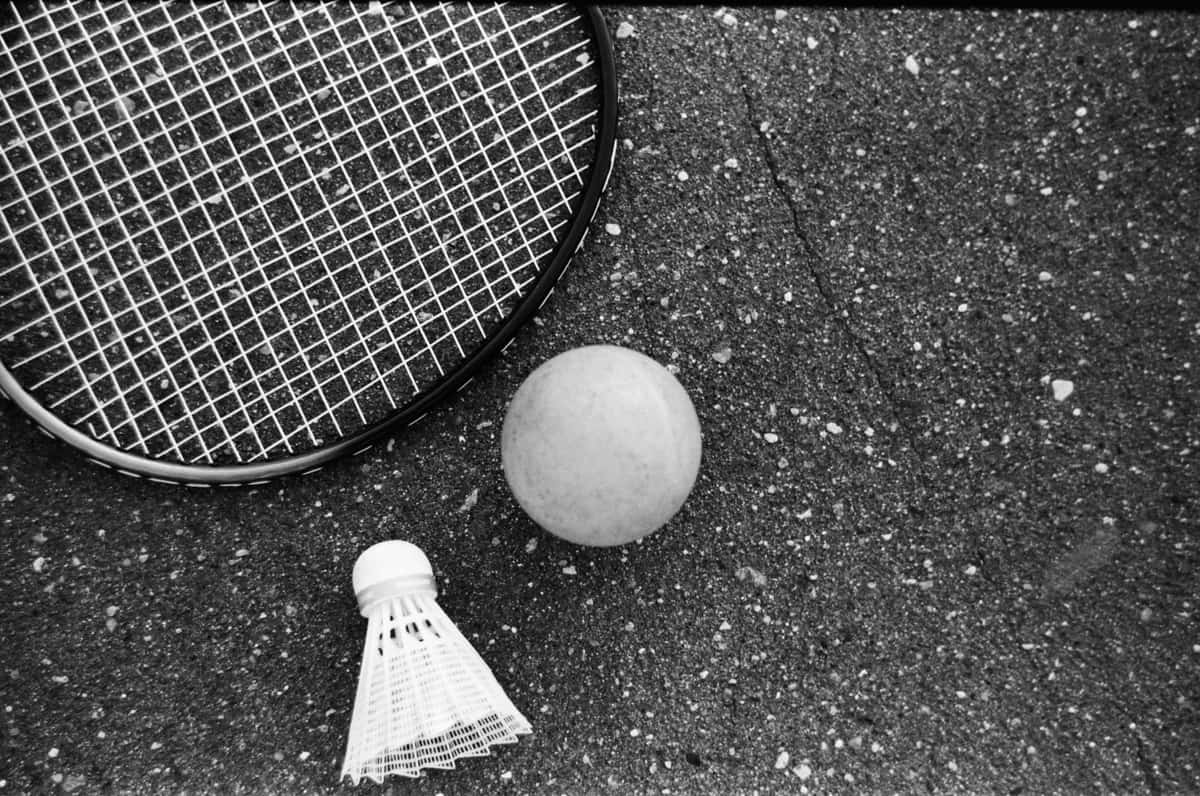
Court and net dimensions, the service rules, rally scoring to 21, and the backyard adjustments.
Picks
Yard games for side yards and narrow strips
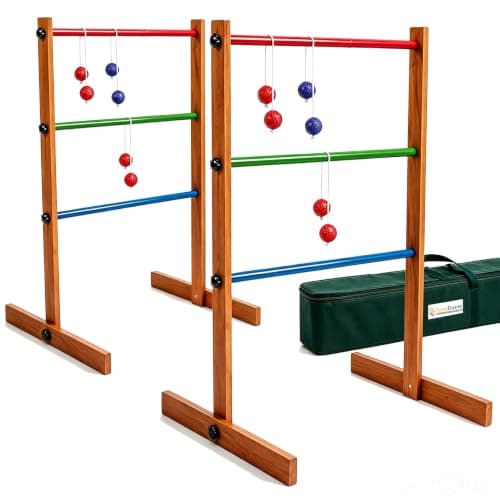
Long and thin is a shape, not a size — the games that fit a corridor of lawn.
Sources
Every figure on this page is copied from one of these sources. If you find one that is wrong or out of date, tell us and we will fix it.