Cornhole bags are sold with a pair of numbers on the listing and almost no explanation of them. They are not a quality score and they are not a price tier. They describe two different fabrics on two different faces of the same bag, and understanding that changes which bag you should buy.
Reading a listing
What the two numbers are
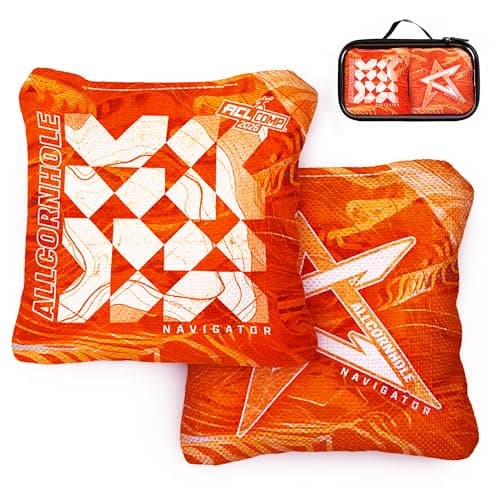
Every competitive bag we cover is dual fabric: one face is built to slide across a varnished board and the other is built to grab it. The two numbers are those two faces, fast first and slow second, on a scale where a higher number means more slide.
| Set | Published speed | Published faces | Certification |
|---|---|---|---|
| GameChanger OG | 95 fast / 64 slow | Patented suede patch technology | ACL PRO certified |
| All-Slides 2.0 | 94 fast / 74 slow | Not published | ACL PRO certified |
| Slide-Rite Geo | Not published | Slick face, suede stick face | ACL PRO stamped |
| ACL COMP | Not published | Dual fabric, dual speed | ACL COMP certified |
| ACL REC Stick-N-Slick | Not published | Stick-N-Slick dual face | ACL REC |
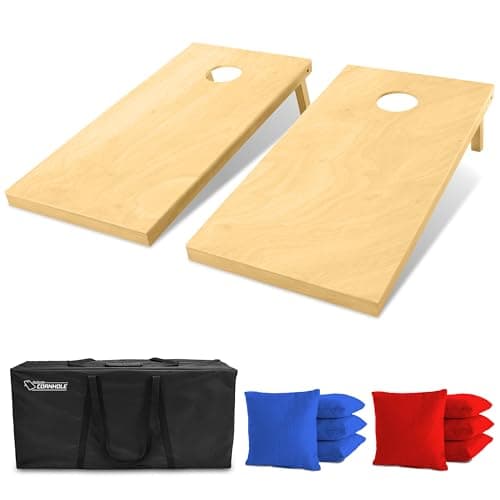
| Bags supplied with board sets | Not published | Usually single fabric | Usually none |
Only two of those sets publish numbers at all. The rest describe the two faces in words instead, which tells you the same thing less precisely — and we print exactly what each maker publishes rather than converting a description into a number.
The shots
Why a bag needs two faces
Cornhole scoring makes both behaviours valuable. Under ACL rules a bag in the hole is three points and a bag on the board is one, and scoring is by cancellation — only the difference between the two sides counts each round. That means denying points is worth as much as scoring them.
- The slide shot lands short and travels up the board into the hole. It needs the fast face down. This is the shot that scores three.
- The blocker lands in front of the hole and stops there, so the opponent's slide shot cannot get past it. It needs the slow face down.
- The push is a slide shot thrown deliberately into your own blocker to shove it into the hole. It needs the fast face and a blocker already sitting there.
A single-fabric bag — which is what most bags included with a board set are — can do one of those three things well. That is the real reason to upgrade bags before upgrading boards. Full rules context: cornhole rules.
Matching the bag to the player
Which to buy
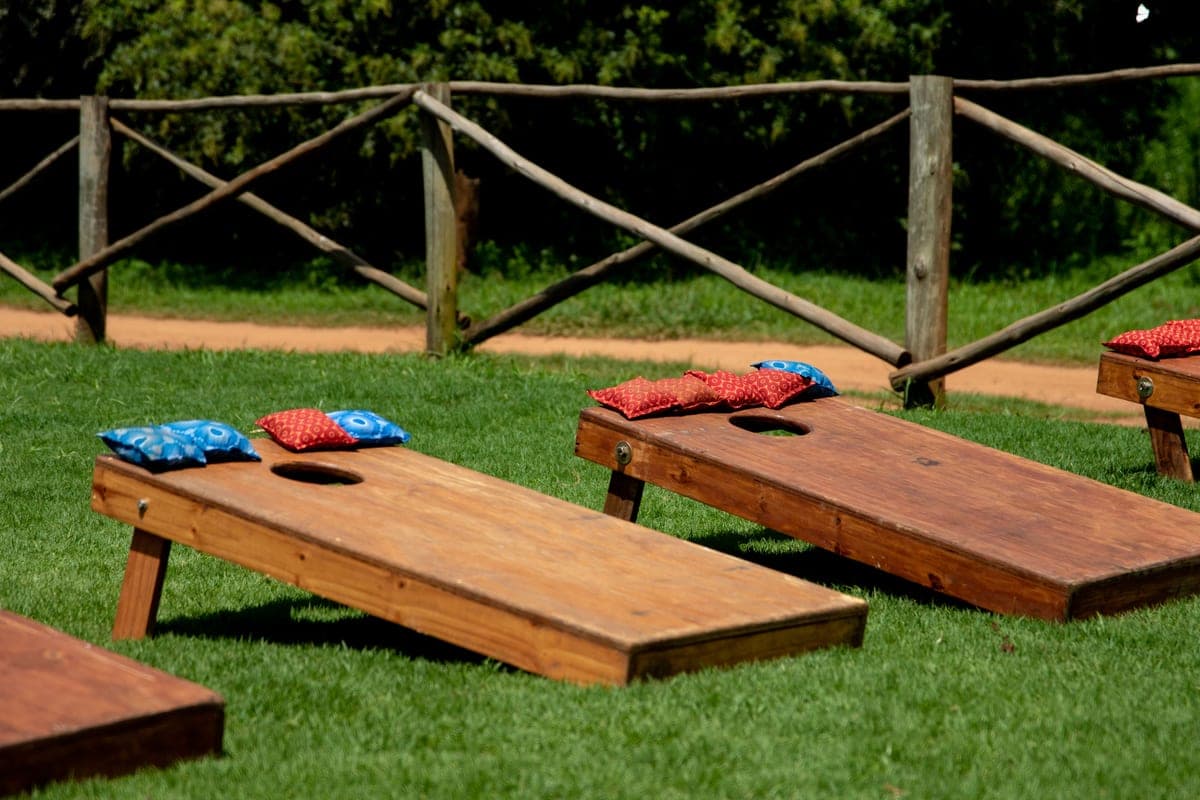
If the boards live in a backyard and guests throw them
A REC-grade dual-face bag. The ACL REC Stick-N-Slick set is exactly this — dual face, ACL REC certification, and no published speed spread to worry about. Nobody at a cookout is choosing a face deliberately, and a forgiving bag is worth more than a fast one.
If you play weekly and want to improve
A narrower PRO spread. All-Slides 2.0 at a published 94/74 gives you both behaviours with enough margin that a slightly mis-thrown bag still does roughly what you wanted.
If you are entering anything
A wide spread, and the certification that matches the event. GameChanger OG publishes 95/64 and ACL PRO certification; ACL COMP bags publish 6 by 6 inches, 16 ounces, a DFR pellet filler and COMP certification. Check which stamp your event requires before you buy, and see how to run a backyard tournament for why matching bags across a bracket removes an argument.
If your court is a driveway
Buy two sets and keep the good one for grass. Speed numbers describe a bag when it is new, and the fast face is the one that abrades first on asphalt — see how to look after cornhole bags.
The ranked comparison of every bag set we cover is in cornhole bags.
What we would buy
The gear behind this guide
The sets whose published specifications this page is built on. Ranked on spec completeness and footprint clarity, not on testing we have not done.

Best speed spread
GameChanger OG ACL Pro Stamped Cornhole Bags
GameChanger
Rated 95 fast and 64 slow with a patented suede patch — the widest published speed gap on this page, which is what a blocker-and-push game actually needs.
Skip this if
Skip this if your group plays one shot: straight at the hole. A 31-point speed spread only pays off when you are choosing sides deliberately.
Price as of October 20, 2026. #ad How we make money
Best balanced dual-speed
All-Slides 2.0 ACL Pro Stamped Cornhole Bags
All-Slides
94 fast and 74 slow — a narrower, more forgiving spread than the GameChanger, which makes it the easier dual-speed bag to learn on.
Skip this if
Skip this if you already throw a hard block. The slow side is not slow enough to hold a bag on a steep board.

Best in wet grass
Slide-Rite Geo ACL Pro Stamped Cornhole Bags
Slide-Rite
ACL PRO stamped, 16 oz, with a proprietary slick face the maker specifically claims holds its slide in any condition and a suede stick side for control.
Skip this if
Skip this if you only ever play on a dry patio. The wet-weather face is the whole reason for the price step.
Price as of October 20, 2026. #ad How we make money
Best for a backyard set
ACL REC Stick-N-Slick Cornhole Bags
Escalade Sports
The league's recreational certification rather than its competitive one — same 6 x 6 in geometry, simpler fabric, and the sensible bag for a set that guests will use.
Skip this if
Skip this if you intend to enter a stamped ACL event. REC and PRO are different certifications.
FAQ
Questions people actually ask
What do the numbers on a cornhole bag mean?
What is a dual-speed cornhole bag?
What speed bag should a beginner buy?
Do speed numbers affect whether a bag is legal?
Why you can check our work
We have not played these. Every figure above is copied from a manufacturer's published listing or a governing body's published rules, and named so you can verify it. Where a maker publishes nothing, the field is blank rather than filled in. How we pick explains the whole method, including what would change a recommendation.
Read next
Related pages
Picks
Yard game guides
Rules, regulation dimensions, materials and storage — sourced from governing bodies and makers.
Picks
Best cornhole bags
Five ACL-certified bag sets compared on published speed ratings, fabric and certification tier.
Guide
How to look after cornhole bags
Cleaning, drying and storing resin-filled bags, and the signs a set is finished.
Picks
Best cornhole boards
Five regulation sets ranked on published surface thickness, frame construction, weight and bags.
Guide
Cornhole rules
ACL scoring, cancellation explained, and what happens past 21 — with the published source.

Guide
How to run a backyard tournament
Bracket sizes, round lengths and the games with published rulebooks worth competing on.
Sources
- American Cornhole League — rules and regulations
- ACL PRO stamped bags — retailer listing
- Escalade Sports — ACL REC Stick-N-Slick bags
Every figure on this page is copied from one of these sources. If you find one that is wrong or out of date, tell us and we will fix it.