The short answer
Quick picks
Ranked on published specs, not on play we have not done. Tap any row to jump to the full write-up further down this page.
| # | Product | Best for | Score | Price |
|---|---|---|---|---|
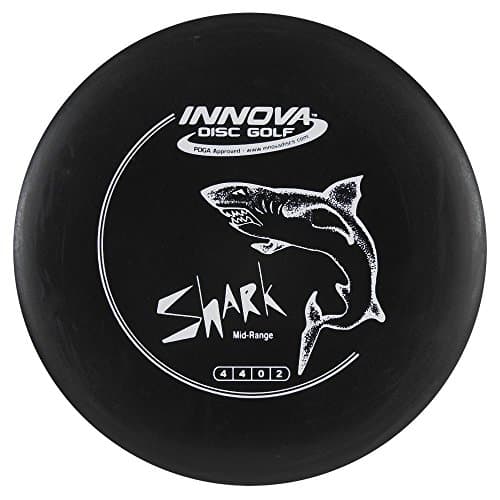
| 1 |  Innova DX Shark Mid-Range, 170-174 g A mid-range in the 170 to 174 gram window — the weight band that does the most jobs for the most people, in the one disc type a beginner should actually own first. | Best weight to start with | 8.1/10 | $12.86 · View on Amazon Price as of October 19, 2026. #ad How we make money |
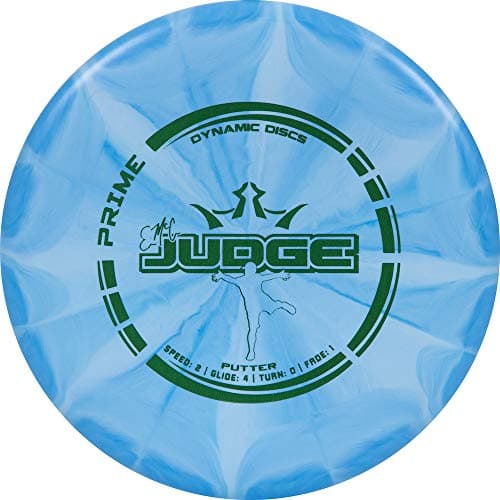
| 2 |  Dynamic Discs Prime Burst EMAC Judge Putter, 173-176 g The heaviest published window on this page and the cheapest disc on it — which is the right combination for a putter, because a putter's whole job is to stop where it lands rather than travel. | Best heavy putter | 7.9/10 | |
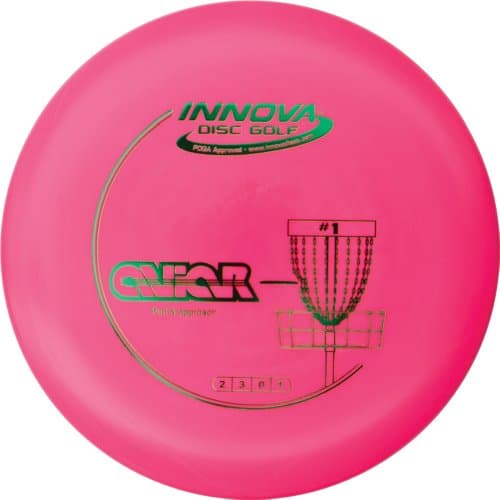
| 3 |  Innova DX Aviar Putt and Approach, 145-150 g The most-thrown putter mold in the sport, sold in a 145 to 150 gram window — around 25 grams lighter than the standard putter weight, which is the difference between a child getting it to the target and not. | Best light disc for children | 7.8/10 | $11.99 · View on Amazon Price as of October 19, 2026. #ad How we make money |
| 4 | Innova DX Shark Mid-Range, 140-150 g The same Shark mold as the 170 to 174 gram listing, 30 grams lighter. Buying both is the only honest way to find out what disc weight does to your own throw, because nothing else about the disc changes. | Best light mid-range | 7.6/10 | $14.49 · View on Amazon Price as of October 19, 2026. #ad How we make money |
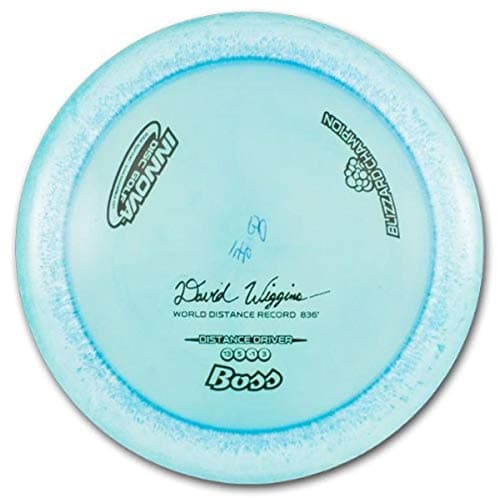
| 5 |  Innova Blizzard Champion Boss Distance Driver, 130-139 g The lightest disc we could find with a published weight window, in the plastic Innova makes specifically to get premium discs down to these weights — microbubbles in Champion, published as giving lighter weights with similar stability. | Lightest published window | 7.2/10 | |
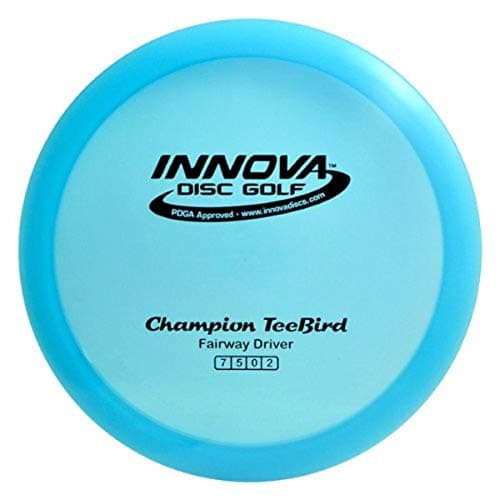
| 6 |  Innova Champion TeeBird Fairway Driver, 170-172 g A single fairway driver that publishes the two numbers no starter set does — the plastic grade and a 170 to 172 gram weight window — which is why it is the disc to buy once you know what you throw. | Best single disc with published specs | 7.6/10 | $17.99 · View on Amazon Price as of October 19, 2026. #ad How we make money |
The short answer: buy a mid-range disc in the 170 to 174 gram window first. That is the band that holds a line in a breeze, lands roughly where you aimed, and still carries for an ordinary arm. Drop to 140 to 150 grams only for a child, a genuinely slow arm, or a still-air distance attempt. Go to 173 grams and above for putting and for wind.
That is the whole recommendation, and the rest of this page is why — plus the part nobody mentions, which is that most disc listings do not publish a weight at all. Every pick below does, and the width of the window each one publishes is part of how we ranked them.
PDGA technical standards
What the rules actually cap
Disc golf is the rare game on this site with a governing body that publishes hard numbers for the equipment itself rather than just the court. The Professional Disc Golf Association sets the following limits for Global class discs, which is the class used in standard sanctioned competition.
| Limit | Published figure |
|---|---|
| Maximum weight | 200 g |
| Maximum weight per diameter | 8.3 g per cm of outside disc diameter |
| Minimum outside diameter | 21 cm |
| Maximum outside diameter | 30 cm |
| Minimum rim depth | 1.1 cm |
| Maximum flexibility rating | 27 lb (12.25 kg) |
Read the second row carefully, because it is the one that actually governs a normal disc. A disc is capped at 8.3 grams for every centimeter of its diameter, so a small-diameter disc hits its ceiling well before the 200 gram figure does. The 200 gram number is the headline and the ratio is the real rule.
The practical consequence is reassuring: nothing you can buy for recreational play is anywhere near either limit. The heaviest published window we found in this category is 178 to 180 grams — more than twenty grams under the ceiling. So legality is not a thing you need to think about when you choose a weight. You are choosing inside a range the rules do not constrain at all, which means the decision is entirely about how the disc flies for you.
The criteria, first
How we judged these
We have not thrown these discs and we are not going to tell you we have. What we can do is rank them on what is published, and for a page about weight that means five things in this order.
- Is a weight window published at all? This is the entry requirement. A disc listing with no weight on it is unbuyable for the purpose of this page, which rules out most starter sets — including the two we rank elsewhere, neither of which states a weight.
- How narrow is the window? A 3 gram window tells you close to exactly what will arrive. A 10 gram window spans the difference between two genuinely different discs. Narrower scores higher.
- Does the weight suit the disc type? Heavy suits putters, because a putter is supposed to stop. Light suits distance drivers in still air. A weight that fights its own disc type scores badly however precisely it is published.
- Is the plastic grade named? Weight and material interact: Innova publishes Blizzard Champion specifically as a way to reach lighter weights in a premium plastic, so a named grade tells you whether a light disc is light by design or light by accident.
- Can you isolate the variable? A mold sold at several published weights lets you change weight and nothing else. That is worth more to a buyer than any claim we could make.
Flight numbers are deliberately not a criterion here, and not quoted anywhere on this page. None of these listings publish them, and we are not lifting per-mold ratings off a retailer to fill a table. Disc golf flight numbers explained covers that system properly, from Innova's own published definitions.
Three effects, not one
What weight actually changes
Distance, and why the answer depends on your arm
Every disc has a speed it was designed to fly at — that is what the speed rating means. Weight decides how much effort it takes to get there. A lighter disc reaches design speed with less power, so for a slower arm it stays airborne longer and goes further. For an arm that can already generate that speed, a lighter disc goes shorter, because it exceeds the speed the mold wants, turns over early in the flight and finishes well off line.
This is why advice about disc weight contradicts itself everywhere you read it. Both halves are true; they are answers to different throwers. The honest version is: if you cannot yet make a disc fly the way it is supposed to, lighter helps. Once you can, lighter hurts.
Wind, where there is no debate
Mass is the only property a disc has that resists wind, and nothing else on the disc compensates for a lack of it. A heavy disc holds its line through a gust; a light one is moved by it. There is no arm speed at which a 130 gram disc becomes good in wind.
If your ground is open — a park, a field, a coastal yard — this single factor should decide your weight before anything else does. It is the same argument we make about light games generally in games for coastal and windy yards, and disc golf is the clearest case of it on the site.
Control, which is why putters are heavy
A putter's job is to stop where it lands rather than travel. Mass makes a disc less lively on impact and less affected by everything in the last few feet of its flight, which is exactly what you want when the target is a basket four meters away. That is why the putter weights published in this category cluster at the heavy end — 173 to 176 grams on our pick — and why nobody sells a 130 gram putter as a serious option.
The same logic runs through the whole bag. The closer the shot, the heavier the disc should be, because accuracy matters more than carry. The further the shot, the more the balance tips the other way.
Reference
The weight bands, and who each is for
| Published band | Who it is for | Who should skip it |
|---|---|---|
| 130-139 g | A repeatable throw chasing maximum distance in still air, on open ground | Beginners, children, anyone in wind, anyone in a garden |
| 140-150 g | Children, genuinely slow arms, and anyone who cannot yet get a disc to carry | Strong arms, and anybody playing on exposed ground |
| 151-169 g | The middle ground — a compromise weight for a thrower between the two camps | Nobody in particular, which is also its problem: it is rarely the best answer to anything |
| 170-175 g | Almost everybody, for almost every disc type. The default, and the band to buy first | Children and slow arms, who will not get it to carry |
| 176-180 g | Putting, approach shots and strong arms on windy ground | Anyone wanting distance, and anyone still learning to throw |
If you take one row from that table, take the 170 to 175 gram one. It is where the most-sold molds cluster, it is the band that behaves most predictably, and it is the weight at which a disc does the thing the mold was designed to do rather than something adjacent to it.
Buying
How to read a weight on a listing
Discs are molded in batches and come out of the mold at slightly different weights, so sellers publish a band rather than a number. That band is the most useful quality signal on the listing, and the spread between the picks below is wider than you would expect.
| Disc | Type | Published window | Window width |
|---|---|---|---|
| Dynamic Discs EMAC Judge | Putter | 173-176 g | 3 g |
| Innova DX Shark (heavy) | Mid-range | 170-174 g | 4 g |
| Innova Champion TeeBird | Fairway driver | 170-172 g | 2 g |
| Innova DX Aviar (light) | Putt and approach | 145-150 g | 5 g |
| Innova Blizzard Champion Boss | Distance driver | 130-139 g | 9 g |
| Innova DX Shark (light) | Mid-range | 140-150 g | 10 g |
| Innova 3-disc starter set | Three discs | Not published | No window at all |
| Discraft 3-disc starter set | Three discs | Not published | No window at all |
Those last two rows are the point. The two starter sets we rank in best frisbee golf discs are still the right first purchase for most people, because three discs covering three jobs beats one disc at a known weight. But neither publishes a weight, so you cannot choose a weight by buying one — and weight is the spec that most changes how the disc behaves. That gap is the reason this page exists.
Notice also that the two widest windows are at the light end. Light discs are published less precisely than heavy ones across this whole category, which is a real and slightly awkward fact: the buyers who most need to know the exact weight are the ones told the least.
Honest steer
Which to buy, by who is throwing
- You have never thrown a disc at a basket. Buy a three-disc starter set, not a weight. Learn what a driver, a mid-range and a putter do first; come back to this page for the second purchase, which is the one where weight starts to matter.
- You own a starter set and want one disc that works. The heavy Shark, 170 to 174 grams. A mid-range at that weight is the most useful single disc in the sport for a non-expert.
- You are buying for a child. The light Aviar, 145 to 150 grams. Around 25 grams under the standard putter weight, which is the difference between a child reaching the target and not. Keep them out of the wind.
- You want to practice putting in the yard. The heavy Judge, 173 to 176 grams, and the cheapest disc here. Weight is unambiguously good in a putter and a garden is unambiguously good for putting — see disc golf basics for a backyard.
- You throw hard and play somewhere exposed. The Champion TeeBird at 170 to 172 grams: a tight 2 gram window and the only pick here in a premium plastic grade that holds its flight for years rather than wearing in.
- You have a repeatable throw and a big empty field. The Blizzard Boss at 130 to 139 grams, with both eyes open. It is the hardest disc here to control, the worst in wind, and the only reason to own it is distance in still air.
Don't conflate them
Weight and plastic are different decisions
The two specs interact, which is why they get muddled. Innova publishes Blizzard Champion as microbubbles in Champion plastic, created to reach lighter weights with similar stability — so in that one case the plastic grade exists because of a weight target. Everywhere else the two are independent: the grade decides how long the disc keeps flying the way it does today, and the weight decides how it flies today.
Both halves are worth getting right, and the other half is in disc golf plastic types — all thirteen of Innova's published grades, grouped into the three decisions that actually matter.
Different disc family
Not the same question as frisbee weight
Worth separating clearly, because the words overlap. A disc golf disc is a small, heavy, sharp-rimmed disc thrown at a basket, governed by the PDGA standards at the top of this page, and sold between roughly 130 and 180 grams. A flying disc for catch or ultimate is wider, blunter and sold between about 145 and 200 grams, with USA Ultimate rather than the PDGA behind it.
Weight matters in both, for related but not identical reasons, and buying one when you wanted the other is a common and expensive mistake. If you are throwing to a person rather than at a target, the page you want is best flying disc, where weight is also the whole decision — just a different one.
And if the target is the thing you still need, the published dimensions are in disc golf basket dimensions, which is the most checkable page on this site.
The picks in full
Every pick, with its published specs
Best weight to start with
Innova DX Shark Mid-Range, 170-174 g
Innova
Our spec score
8.1/10
- Spec completeness
- 6/10
- Footprint clarity
- 3/10
- Durability
- 5/10
- Pack-down
- 10/10
Scored on published specifications only. We have not played this set.
A mid-range in the 170 to 174 gram window — the weight band that does the most jobs for the most people, in the one disc type a beginner should actually own first.
Skip this if
Skip this if the thrower is a child or has a slow arm. Above about 170 grams a disc needs real arm speed to carry, and the same mold is sold at 140 to 150 grams for exactly that reason.
What works
- Publishes a 4-gram weight window, which is as precise as this category gets
- A mid-range is the disc that works at every distance a non-expert actually throws
- The same mold is sold at 140-150 g, so you can isolate weight without changing anything else
- DX is the grippiest and cheapest grade Innova publishes
What does not
- No flight numbers on the listing, so you have to look the mold up separately
- No published diameter, so you cannot check it against the PDGA 8.3 g per cm ratio yourself
- DX wears in and gets more understable, which the maker states openly
Published specifications
- Disc type
- Mid-range
- Published weight
- 170-174 g
- Mold
- Shark
- Plastic grade
- DX
- DX durability
- Published as the most economical grade, wearing in progressively
- Color
- Colors may vary
- Flight numbers
- —
- Diameter
- —
- Rim width
- —
Source: Amazon product listing
Source: Amazon product listing
Source: Amazon product listing
Source: Amazon product listing
Source: Innova published plastic types page
Source: Amazon product listing
Not published by the manufacturer.
Not published by the manufacturer.
Not published by the manufacturer.
Manufacturer listing: Amazon product listing (Innova)
Price as of October 19, 2026. #ad How we make money
Best heavy putter
Dynamic Discs Prime Burst EMAC Judge Putter, 173-176 g
Dynamic Discs
Our spec score
7.9/10
- Spec completeness
- 5/10
- Footprint clarity
- 3/10
- Durability
- 6/10
- Pack-down
- 10/10
Scored on published specifications only. We have not played this set.
The heaviest published window on this page and the cheapest disc on it — which is the right combination for a putter, because a putter's whole job is to stop where it lands rather than travel.
Skip this if
Skip this if you are buying one disc for a child. At 173 to 176 grams it is the heaviest thing here, and a putter that heavy simply will not carry for a slow arm.
What works
- Publishes a 3-gram weight window, the tightest on this page
- Heavy is the correct answer for a putter, and this is the heaviest published option here
- The least expensive disc on this page by a clear margin
- A second brand, so the weight argument is not an Innova-only observation
What does not
- Dynamic Discs publishes no description of what Prime Burst plastic is on this listing
- No flight numbers and no diameter published
- Too heavy to be anyone's only disc
Published specifications
- Disc type
- Putter (putt and approach)
- Published weight
- 173-176 g
- Mold
- EMAC Judge
- Plastic grade
- Prime Burst
- Color
- Colors may vary
- Flight numbers
- —
- Diameter
- —
- Rim width
- —
- Plastic description
- —
Source: Amazon product listing
Source: Amazon product listing
Source: Amazon product listing
Source: Amazon product listing
Source: Amazon product listing
Not published by the manufacturer.
Not published by the manufacturer.
Not published by the manufacturer.
Not published by the manufacturer.
Manufacturer listing: Amazon product listing (Dynamic Discs)
Best light disc for children
Innova DX Aviar Putt and Approach, 145-150 g
Innova
Our spec score
7.8/10
- Spec completeness
- 6/10
- Footprint clarity
- 3/10
- Durability
- 5/10
- Pack-down
- 10/10
Scored on published specifications only. We have not played this set.
The most-thrown putter mold in the sport, sold in a 145 to 150 gram window — around 25 grams lighter than the standard putter weight, which is the difference between a child getting it to the target and not.
Skip this if
Skip this if you are playing in wind. A light disc is a disc the wind gets hold of, and 145 grams in a breeze goes where the breeze says rather than where you aimed.
What works
- A 5-gram published window at a weight almost nothing else publishes
- Light enough that a child or a slow arm can actually make it fly
- The same mold is listed at 170-172 g, so a household can buy both and compare directly
- Cheapest way into disc golf on this site
What does not
- Poor in wind, which is the unavoidable trade-off of a light disc
- No published age floor, despite being the obvious disc for children
- No flight numbers on the listing
Published specifications
- Disc type
- Putt and approach
- Published weight
- 145-150 g
- Mold
- Aviar
- Plastic grade
- DX
- DX grip
- Published as affording superior grip, with the widest model selection
- Same mold also sold at
- 170-172 g and 173-175 g
- Flight numbers
- —
- Diameter
- —
- Published age floor
- —
Source: Amazon product listing
Source: Amazon product listing
Source: Amazon product listing
Source: Amazon product listing
Source: Innova published plastic types page
Source: Amazon product listing
Not published by the manufacturer.
Not published by the manufacturer.
Not published by the manufacturer.
Manufacturer listing: Amazon product listing (Innova)
Price as of October 19, 2026. #ad How we make money
Best light mid-range
Innova DX Shark Mid-Range, 140-150 g
Innova
Our spec score
7.6/10
- Spec completeness
- 5/10
- Footprint clarity
- 3/10
- Durability
- 5/10
- Pack-down
- 10/10
Scored on published specifications only. We have not played this set.
The same Shark mold as the 170 to 174 gram listing, 30 grams lighter. Buying both is the only honest way to find out what disc weight does to your own throw, because nothing else about the disc changes.
Skip this if
Skip this if you already throw hard. A light mid-range in a strong arm turns over early and finishes well left of the target, and the heavier window of the same mold costs less.
What works
- Identical mold to the heavy Shark, so weight is the only variable between them
- A 10-gram window at the light end, where very little publishes anything
- Easier to get distance from at low arm speed than any heavier mid-range
What does not
- A 10-gram window is wider than the heavy listing's 4 grams, so you know less about what arrives
- Costs more than the heavier version of the same disc
- Light discs are worse in wind, full stop
Published specifications
- Disc type
- Mid-range
- Published weight
- 140-150 g
- Mold
- Shark
- Plastic grade
- DX
- Same mold also sold at
- 165-169 g, 170-174 g and 178-180 g
- Color
- Colors may vary
- Flight numbers
- —
- Diameter
- —
- Rim width
- —
Source: Amazon product listing
Source: Amazon product listing
Source: Amazon product listing
Source: Amazon product listing
Source: Amazon product listing
Source: Amazon product listing
Not published by the manufacturer.
Not published by the manufacturer.
Not published by the manufacturer.
Manufacturer listing: Amazon product listing (Innova)
Price as of October 19, 2026. #ad How we make money
Lightest published window
Innova Blizzard Champion Boss Distance Driver, 130-139 g
Innova
Our spec score
7.2/10
- Spec completeness
- 7/10
- Footprint clarity
- 2/10
- Durability
- 9/10
- Pack-down
- 10/10
Scored on published specifications only. We have not played this set.
The lightest disc we could find with a published weight window, in the plastic Innova makes specifically to get premium discs down to these weights — microbubbles in Champion, published as giving lighter weights with similar stability.
Skip this if
Skip this unless you have a repeatable throw and a wide open field. A 130-gram distance driver is a specialist tool: it is the hardest disc here to control, the worst in wind, and no use at all in a garden.
What works
- The lightest published window on this page, and it is published rather than guessed
- Blizzard Champion is a named grade with a published reason to exist
- Champion durability at a weight DX cannot reach
What does not
- A distance driver is the wrong first disc at any weight
- Worst disc here in wind, by a wide margin
- Most expensive disc on this page
- No flight numbers published on the listing
Published specifications
- Disc type
- Distance driver
- Published weight
- 130-139 g
- Mold
- Boss
- Plastic grade
- Blizzard Champion
- Blizzard Champion
- Published as microbubbles in Champion plastic for lighter weights with similar stability
- Same mold also sold at
- 140-150 g and 151-159 g
- Flight numbers
- —
- Diameter
- —
- Rim width
- —
Source: Amazon product listing
Source: Amazon product listing
Source: Amazon product listing
Source: Amazon product listing
Source: Innova published plastic types page
Source: Amazon product listing
Not published by the manufacturer.
Not published by the manufacturer.
Not published by the manufacturer.
Manufacturer listing: Amazon product listing (Innova)
Best single disc with published specs
Innova Champion TeeBird Fairway Driver, 170-172 g
Innova
Our spec score
7.6/10
- Spec completeness
- 7/10
- Footprint clarity
- 3/10
- Durability
- 9/10
- Pack-down
- 10/10
Scored on published specifications only. We have not played this set.
A single fairway driver that publishes the two numbers no starter set does — the plastic grade and a 170 to 172 gram weight window — which is why it is the disc to buy once you know what you throw.
Skip this if
Skip this if you have never thrown a disc. One fairway driver is not a round of disc golf, and Champion plastic is the slickest in Innova's range — the grippier DX in a starter set is the better first purchase.
What works
- Publishes a weight window, which almost no disc listing on this site does
- Names its plastic grade, so the durability claim can be checked against Innova's own plastics page
- Champion is the grade Innova publishes as holding its flight longest
What does not
- No flight numbers on the listing itself — you have to look the mold up
- Champion plastic is the slickest Innova makes, which is the wrong grip for a beginner
- One disc only; a round needs three
Published specifications
- Discs
- 1 fairway driver
- Plastic grade
- Champion
- Weight
- 170-172 g
- Champion durability
- Published as retaining flight characteristics longer than DX or Pro
- Flight numbers
- —
- Diameter
- —
- Rim width
- —
Source: Amazon product listing
Source: Amazon product listing
Source: Amazon product listing
Source: Innova published plastic types page
Not published by the manufacturer.
Not published by the manufacturer.
Not published by the manufacturer.
Manufacturer listing: Amazon product listing (Innova)
Price as of October 19, 2026. #ad How we make money
FAQ
Questions people actually ask
What weight disc golf disc should a beginner buy?
What is the maximum legal weight for a disc golf disc?
Do lighter discs go further?
What weight disc is best in wind?
Why do disc listings show a weight range instead of a weight?
Is disc weight the same thing as disc golf flight numbers?
Why you can check our work
We have not played these. Every figure above is copied from a manufacturer's published listing or a governing body's published rules, and named so you can verify it. Where a maker publishes nothing, the field is blank rather than filled in. How we pick explains the whole method, including what would change a recommendation.
Read next
Related pages
Picks
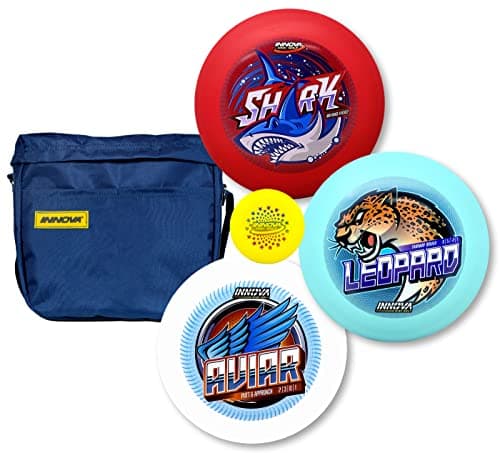
Best frisbee golf discs
Driver, mid-range and putter explained, and the PDGA-approved three-disc set to start with.

Guide
Disc golf flight numbers explained
Speed, glide, turn and fade with Innova's published ranges, and the comparison rule that makes them usable.
Guide
Disc golf plastic types
Innova's published plastic grades, what each is for, and why the cheapest one is the right first buy.
Picks
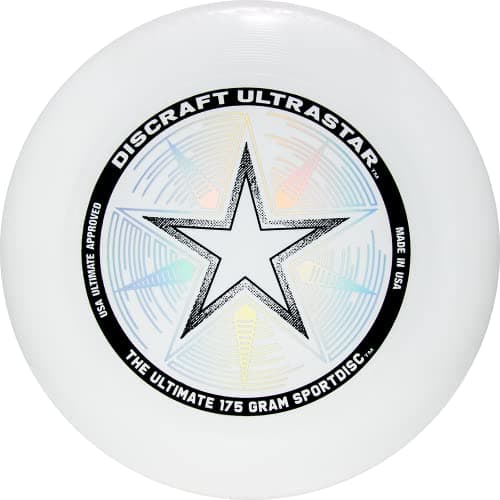
Best flying disc
Four discs on published weight and USA Ultimate approval level — and why 30 grams changes everything.
Guide
Disc golf basics for a backyard
What each starter disc does, how to practise without a basket, and when a park is the answer.
Picks
Yard game guides
Rules, regulation dimensions, materials and storage — sourced from governing bodies and makers.
Sources
- PDGA — disc technical standards
- Innova Discs — plastic types
- Innova Discs — understanding flight numbers
Every figure on this page is copied from one of these sources. If you find one that is wrong or out of date, tell us and we will fix it.