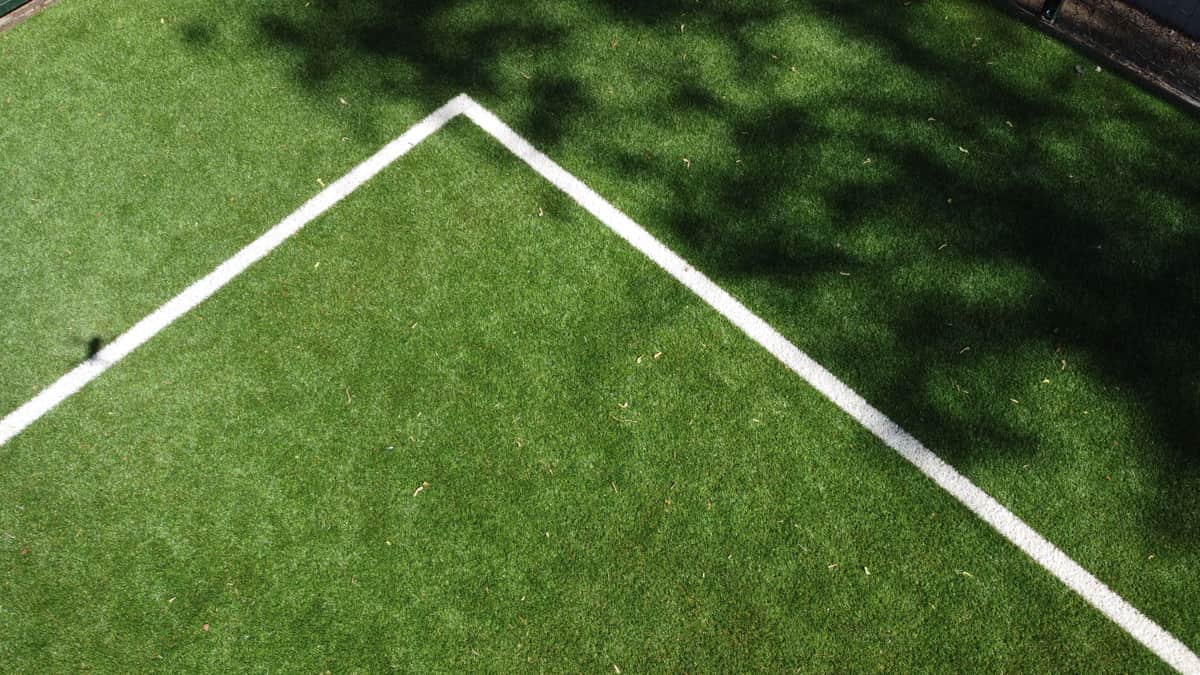
The basics
How an inning works
Each contestant pitches two shoes in succession, then the other player pitches theirs. That set of four shoes is an inning, and it is scored before anyone walks up to collect.
After scoring, play continues from the opposite pit — you pitch back the other way, which is why the walking in horseshoes is one-way rather than a return trip. The player who scores, or ties a score, pitches first in the next inning.
Cancellation and count-all
Scoring
| Outcome | Points |
|---|---|
| Ringer — shoe encircling the stake | 3 |
| Closest shoe within 6 in of the stake | 1 |
| Both of your shoes closer than either of your opponent's | 2 |
| One ringer plus the closest shoe | 4 |
| Two ringers in one turn (count-all) | 6 |
| Leaning shoe | No value beyond a shoe lying flat and touching |
| Equal ringers by both players (cancellation) | 0 — they cancel |
There are two published scoring systems and it is worth saying which you are using before the first shoe.
Cancellation is the standard. Equal ringers cancel each other out, so if both players throw one ringer, nobody scores from them. What survives the cancellation counts, and the maximum from one inning is generally four — a ringer plus the closest shoe.
Count-all credits everything: every ringer and every close shoe scores for whoever threw it. A turn can produce a maximum of six and a minimum of zero. Count-all games always run to a preset number of shoes rather than a score.
Cancellation makes for closer, longer games and is what most backyards should use. Count-all is faster, and it is much kinder to a weaker player, because their ringers are never erased by a stronger opponent's.
The best handicap in yard games
The two foul lines
This is the part of the NHPA rulebook that other yard games should copy. The stakes stay 40 feet apart for everybody. What changes is where you stand:
| Class | Foul line |
|---|---|
| Adult men | 37 ft |
| Women, youth through 18, and men 70 and over | 27 ft |
| Midpoint line used on some courts | 20 ft |
Everyone plays the identical game at the identical target. A ten-foot difference in throwing distance is a substantial handicap and it is built into the published rules rather than negotiated at the start of the afternoon. Nobody is being given an allowance; they are pitching from their published line.
Older men may also elect to use one distance or the other, provided they stay consistent.
Equipment
What a legal shoe is
| Dimension | Limit |
|---|---|
| Weight | No more than 2 lb 10 oz; no minimum |
| Width | No more than 7 1/4 in |
| Length | No more than 7 5/8 in |
| Opening | No more than 3 1/2 in (used shoes tolerated to 3 5/8 in) |
| Height | No more than 1 in |
| Pick-up hook | No more than 36 in long, protruding no more than 2 in |
The opening is the specification that decides how the game feels. A 3½-inch maximum against a 1-inch stake is what makes a ringer difficult but not improbable — widen it and the game becomes trivial, which is why the limit exists at all.
Court construction, pit dimensions and the stake lean are on the set page: horseshoes. If digging two pits is the sticking point, the portable alternative is compared in horseshoes vs ladder toss, and the other adult precision game is in bocce vs horseshoes.
What we would buy
The gear behind this guide
The sets whose published specifications this page is built on. Ranked on spec completeness and footprint clarity, not on testing we have not done.

Best overall
St. Pierre Professional Horseshoe Set
St. Pierre
Drop-forged steel shoes built to the NHPA's published weight limit, which is the one spec that decides whether a shoe behaves like a competition shoe.
Skip this if
Skip this if children will be anywhere near the pits. A 2 lb 10 oz steel shoe thrown 40 ft is the most dangerous object on this website.
FAQ
Questions people actually ask
How many points is a ringer in horseshoes?
Is a leaner worth extra points in horseshoes?
What score do you play horseshoes to?
How far do you stand from the stake?
Why you can check our work
We have not played these. Every figure above is copied from a manufacturer's published listing or a governing body's published rules, and named so you can verify it. Where a maker publishes nothing, the field is blank rather than filled in. How we pick explains the whole method, including what would change a recommendation.
Read next
Related pages
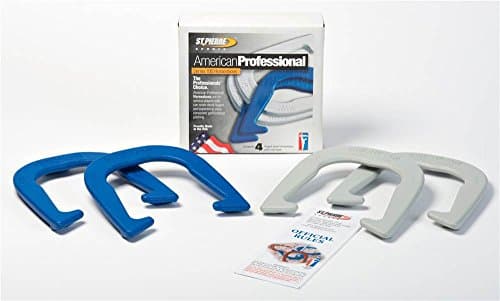
Comparison
Cast iron vs drop-forged horseshoes
Both materials make a legal 2 lb shoe; one chips on a stake strike and one deforms.
Picks
Yard game guides
Rules, regulation dimensions, materials and storage — sourced from governing bodies and makers.
Picks
Horseshoes
40 feet between stakes, a built clay or sand pit, and a 2 lb 10 oz weight limit straight from the NHPA.
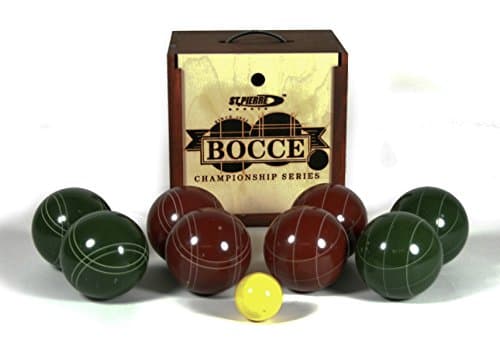
Comparison
Bocce vs horseshoes
Two adult precision games — one plays anywhere, the other needs two dug pits.
Comparison
Horseshoes vs ladder toss
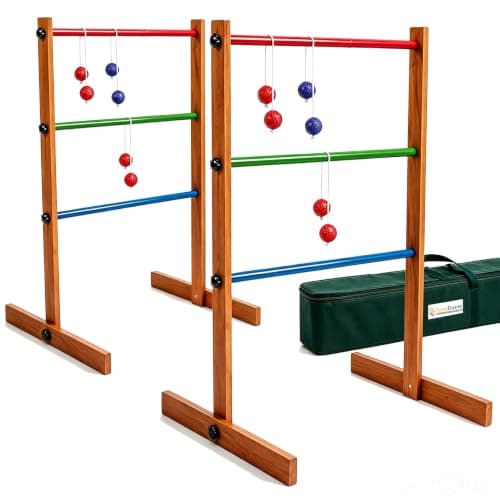
A built clay pit and 48 feet against a 20-foot game that lives in a nylon bag.
Guide
Yard game scoring systems compared
Cancellation, exact-21, exact-50 and rally scoring, and which keeps a game close.
Sources
Every figure on this page is copied from one of these sources. If you find one that is wrong or out of date, tell us and we will fix it.