Every NHPA figure
The full published specification
| Element | Specification |
|---|---|
| Playing area | 6 ft wide x 46 ft long |
| Overall recommended area | 10 ft wide x 50 ft long |
| Buffer | 2 ft on each side and behind the pitching boxes |
| Stake distance | 40 ft, front of stake to front of stake |
| Stake diameter | 1 in |
| Stake height, ground-level court | 14 to 15 in above the pitching platform |
| Stake height, raised pit | 18 to 19 in above the pit bottom |
| Stake lean | About 3 in toward the opposite stake |
| Pit length | 43 in minimum, 72 in maximum (inside) |
| Pit width | 31 in minimum, 36 in maximum (inside) |
| Pit substance depth | 4 in minimum, 8 in recommended |
| Stake to pit edge | 21 in minimum |
| Pit surface | Moist blue clay recommended |
| Pitching platform width | 18 to 20.5 in |
| Pitching platform length | 6 ft minimum |
| Short-distance platform extension | 10 ft forward |
| Foul lines | 37 ft and 27 ft, measured from the front of the opposite stake |
| Midpoint foul line | 20 ft |
| Backstop | At least 3 ft behind the stake, 1 ft high |
| Protective barrier | At least 8 ft behind the stakes; 4 ft high recommended |
| Side-by-side court stake separation | 10 ft minimum, 12 ft recommended |
| Back-to-back court stake separation | 16 ft minimum |
| Overhead clearance | 12 ft minimum |
| Raised pit framework height | 7 in maximum above adjacent platforms |
No other game in this catalogue is documented to that level. It is the reason a backyard horseshoe court can be genuinely correct rather than approximately right — and the reason we would not build one to any other numbers.
What to do first
Build order
- Choose the line, then check what is behind it. You need about 50 feet including buffer, 12 feet of overhead clearance, and nothing breakable or occupied behind either stake. This decision is permanent — take longer over it than the digging.
- Set the two stake positions 40 feet apart, front to front. Everything else is measured from these.
- Mark the pit boxes around them. Anywhere from 43 to 72 inches long and 31 to 36 inches wide, with the stake at least 21 inches from the edges. Bigger pits are more forgiving of a wild shoe; smaller ones use less clay.
- Excavate and fill. At least 4 inches of pit substance, 8 recommended. The NHPA recommends moist blue clay — this is the part people substitute and regret, because the pit is what stops a shoe bouncing.
- Set the stakes. 1 inch in diameter, 14 to 15 inches above the platform on a ground-level court, leaning about 3 inches toward the opposite stake. Set them deep enough that a direct hit does not move them.
- Build the platforms. 18 to 20.5 inches wide and at least 6 feet long, one on each side of each pit.
- Mark both foul lines. 37 feet and 27 feet from the front of the opposite stake. Both, not one — this is the handicap system and it is why the game works across ages.
Groundwork
Levelling, and the mistake that ruins a court
The two pits must be level with each other, which is a different and harder requirement than each one being level in itself. A court where one end sits four inches higher than the other is subtly wrong in a way nobody can diagnose from the pitching platform, and it cannot be fixed afterwards without rebuilding.
Run a string line between the two stake positions before you excavate anything and check it with a level over the full 40 feet. The general version of this problem, and the fixes for it, is in levelling ground for yard games.
Clay also needs maintenance rather than being a one-time job: it dries out and compacts over a season, and the NHPA specifies 4 inches of substance in the scoring area between games. Topping it up in spring is normal.
Worth it?
What you are getting for the work
A properly built pit is a twenty-year fixture. The shoes are drop-forged steel and effectively unbreakable, the NHPA publishes enough detail that a home court matches a club court exactly, and the two-foul-line system is the most elegant handicap in yard games — everyone pitches at the same 40-foot target from a published line appropriate to them.
What you are giving up is flexibility. Fifty feet of yard, permanently, for a game that is genuinely adults-only. If that trade does not appeal, the same pitching satisfaction without any excavation is cornhole, and the rules comparison is in cornhole vs horseshoes.
Scoring, ringers and the foul-line system in full: horseshoe rules.
What we would buy
The gear behind this guide
The sets whose published specifications this page is built on. Ranked on spec completeness and footprint clarity, not on testing we have not done.

Best overall
St. Pierre Professional Horseshoe Set
St. Pierre
Drop-forged steel shoes built to the NHPA's published weight limit, which is the one spec that decides whether a shoe behaves like a competition shoe.
Skip this if
Skip this if children will be anywhere near the pits. A 2 lb 10 oz steel shoe thrown 40 ft is the most dangerous object on this website.
FAQ
Questions people actually ask
How far apart are horseshoe stakes?
How big does a horseshoe pit need to be?
How high should a horseshoe stake be?
How much total space does a horseshoe court need?
Why you can check our work
We have not played these. Every figure above is copied from a manufacturer's published listing or a governing body's published rules, and named so you can verify it. Where a maker publishes nothing, the field is blank rather than filled in. How we pick explains the whole method, including what would change a recommendation.
Read next
Related pages
Picks
Yard game guides
Rules, regulation dimensions, materials and storage — sourced from governing bodies and makers.
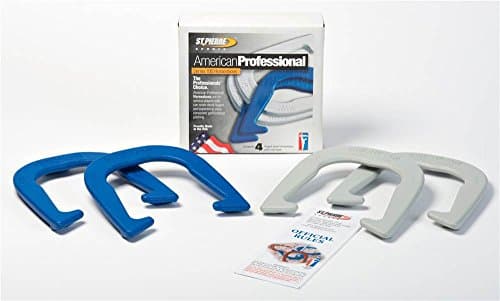
Picks
Horseshoes
40 feet between stakes, a built clay or sand pit, and a 2 lb 10 oz weight limit straight from the NHPA.
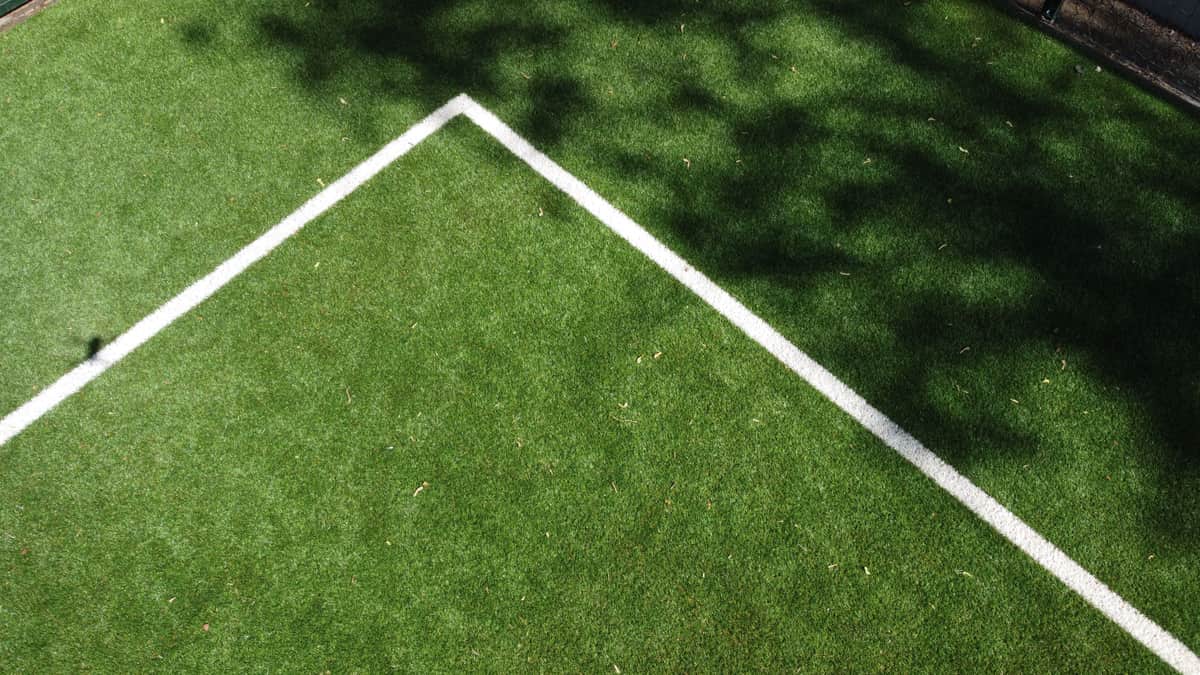
Guide
Horseshoe rules
Ringers, leaners, cancellation scoring to 40, and the 27 and 37 foot foul lines.
Comparison
Cornhole vs horseshoes
The 33-foot court you carry out against the 48-foot court you dig in permanently.
Guide
Levelling ground for yard games
Which games need level ground, which do not, and the fixes that avoid digging entirely.
Guide
Setting up a permanent games area
Plan a games corner around published footprints — and the one shape that unlocks the most.
Sources
Every figure on this page is copied from one of these sources. If you find one that is wrong or out of date, tell us and we will fix it.